Showing posts with label learning. Show all posts

Friday, February 21, 2014

Gaining volume and day 57

Gain and Master Volume


To a bassist using solid state, the relationship between these two are very confusing.  To a guitarist, it is a little more obvious.  If you ask both what gain is, they'll usually give you a blank stair, and the guitarist will talk about getting a dirty signal.

If you look at a guitar as a signal transmitter, you can perhaps understand gain a bit more.  The signal from your guitar is relatively low, that is why passive instruments with no batteries are still the most prevalent.  The current created by the magnets and the strings is enough of a signal.  When it gets to your amp, it will encounter 2 stages in most amp designs.  The first stage is the "pre-amp".  This is the stage where this tiny, small signal gets boosted.  This is where your tone is "shaped", if you are to make changes to a signal, its much easier to fine tune the signal if it is larger. That is what the Gain does, its a knob that increases how big you transform your signal.  If you make the signal very large, you get pre-amp distortion.

(Pictured: to the left are the small pre-amp tubes, to the right are the large power amp tubes)

After the first Gain stage, the pre-amp, the signal goes to the power amp stage.  Again, this stage takes whatever signal you give it and makes it much larger so that it can power the speakers enough to make a mechanical transition of the signal.  If you have boosted the signal to great levels in the pre-amp using gain, then it will distort this power section as well.  It also means you get a HUGE increase in volume.  Power amp distortion causes the tubes to get very hot, and will wear out your amplifier components.  Power amp tubes will glow with the fire of a thousand suns when overdriven hard.

(pictured: power tubes, some people aren't used to seeing things lit up like this in electronics unless its LED's)

That is why the Master Volume knob was invented.  It sits between the Pre-amp and power amp stages(technically it is pre-amp).  With it, you can bring down the signal strength before it gets to the power amp section, but it will let the pre-amp distortion through.  Pre-amp distortion is popular because it is much lower heat and voltage, and is also cheaper to do all around.  You can get that distorted sound while keeping the power tubes working at normal temperatures, and keep your ears from getting split from volume.

Solid state bassists, of which there are more than tube users these days, don't have this kind of distortion usually.  So how do they know how much gain to use?  Well... they get a helping hand.


Day 57

I have pretty much explored my guitar amp and can now manipulate it to do what I want fairly quickly.  Not too bad for having it for a decade right?  Yea lol.  I made it a point to know how amp EQ works with bass. A lot of people I've known that played kind of have these super complex and powerful EQ's and have no idea what they're for.  They max them or set it all at 12 o'clock and call it a day.  Then they talk about needing this or that pedal for this sound.  I wanted to get away from that.  It is a habit of mine to see that kind of stuff and want to not be that way.  When I got the Thunderfunk, I was like "I really REALLY need to educate myself if I'm going to have this kind of amp". I remember my bass bud coming over a good number of years back and him not being happy with not getting a Claypool sound.

"its gotta be his fingers or his carl thompson"

I informed him that Claypool likes to play full mids blasted.  A "frowny" if you look at it on a graphic EQ.  I EQ'd it in, and sure enough, there it was.  He then played Tommy the Cat and made me realize how much I suck at bass.  Anyway, recognizing EQ'ing and sounds has always been important to me.

So far I switch between as light a distortion as this amp can get(which is not very light lol) and a high gain metal sound, which it is surprisingly good at doing.  Sometimes it gets pretty fuzzy too.  I have some stuff to learn about the frequencies and how they interact with the band.  Like, I don't know the mid frequencies in Guitar, so I don't know if boosting them will interfere with the bass player's sounds.  The whole reason you do not want to scoop a bass live is that you kill "your" frequency.  You boost where you overlap with the drums, and you muddy up the guitarist by interfering with his highs, while your relatively instrument free play area of the "mids" is cut all to hell.  That's a "scoop", and its only great in your bedroom.  I need to research the guitarist's play area.  It sure seems a lot of people scoop a guitar and it seems more accepted.


Friday, February 14, 2014

Echoes and Day 50

The sound of Reverb is the attempt to mimic the echo of the music reflecting back to the audience in certain acoustic spaces.  Generally, like in real life, a reverb echo is many many copies of the original signal fed back into the signal chain at very quick intervals, but lowering in amplitude(volume) each time until it quickly is no longer audible.  The real neat part of reverb is the ways it has been achieved.

The first way that Reverb is made on purpose for recordings have been in "echo chambers".  These are purpose built rooms with nothing more than a speaker and a microphone.  The signal is played and real echos, real reverb, is recorded in the chamber.  The only "fake" part about it is that the whole band is not playing inside.  This technically means that the room can be arranged to produce "unnatural" echo effects that would not happen in a performance.

Then came the plate and spring reverbs.  They used a transducer to turn the signal into physical movement that would manipulate a piece of metal into creating reverb effects.  At the other end of the metal would be a microphone to pick up the sounds.  Plate reverbs can be huge, hundreds of pounds, but can be tweaked with many settings.  Their size prohibits them from being portable, so are generally used as studio recording devices.  Spring reverbs are not as precise, but can be made small enough to fit into amp models you can carry around.  Fender are best known for including reverb in their amplifier combos in the 60's and 70's.

The plate and spring echo is the "classic" reverb sounds that are well accepted today.  The flaw is that they create a false echo, not a real representation of the signal.  Digital Reverb is the most common found now, as it is relatively easy to copy a signal and feed it back to create the echo.  Unlike Plate or Spring which mimic a generic echo, digital can actually create the many signals found in real echo.  Over time digital reverb now mimics the Plate and Spring reverb, and can even do their styles while actually using true copies of the signal, in many ways some find it superior.  A good digital reverb can do all the types and blend them, and even do some strange ones.

Day 50

Ok, this is the home stretch.  I'm going to think positive and work on learning a song from the game that I don't already know.  Here we go: Aerosmith Walk this Way.

Ok.  Screw that.  If it was Ragdoll I could probably listen to it over and over while I learn... not so much with Walk This Way.

Knockin' on Heaven's Door.  Ok, now this song I think I like enough to listen end on end while "learning" it in the game.  I'm going to do it at least for 45 minutes every day till the end of the 60 day challenge.  I'm not going to be pessimistic and I'm not going to say that how the game teaches songs is bad, I'm going to trust it and do its recommendations and I"m going to learn this song without going on Youtube.  I want this game to teach me a song.  A single song in the 60 day challenge.

Given, I did use Rocksmith to learn You Really Got Me, Everlong and Blitzkrieg Bop, I used a lot of youtube help with Everlong and I don't really play the version the game puts forth.  The "lead" version, because again, it only sounds good if I'm playing it with a backup band.  I opted to go for a more solo friendly version.  You want me to sit there and plink out the lead verion, I can, but you'll soon go "oh I see what you mean".

Thursday, February 13, 2014

Metal not lmletal and day 49


The problem of volume has always been with the guitar.  Earlier strings instruments used bows and could have giant bodies to provide immense volumes.  Eventually the body would get so large that you got out of the guitar's sound pocket and you'd be playing Bass.  Any form of making a guitar larger ended up being more like larger string instruments like the Harp or the piano.  This was all solved by electrical amplification in the 20th century, but right before that revolution an amazingly cool guitar style was invented.

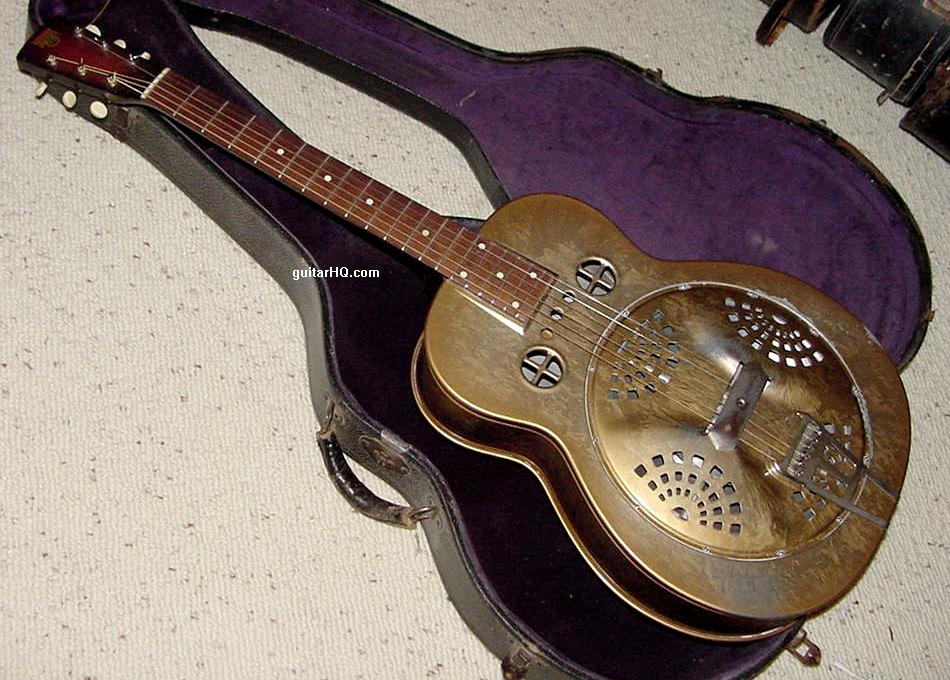
Resonators are guitars designed to work with metal parts to create a strong reflection of sound back to the audience.  The sound was certainly louder than many acoustics of the time, but the metal really did give it a unique sound that did not work with most types of music at the time.  Resonators became cheap, and easier to move around than having your own electrical PA system.  The more "rural" types of music adopted these "outdated" instruments, and due to the sheer amount of usage they got in Bluegrass and blues, they are now accepted as mainstay sounds of those genre.

Resonators have metal bowls and reflectors, known as "Cones" built under the strings to take the sound and reflect it back out into the audience.  The originals used a 3 cone design, but a split in the company lead to a simpler and cheaper "dobro" design using a single cone.  Further, you could get square necked resonators to play like a steel lap guitar, or the round neck variety to play more like a traditional guitar.  Both are popular with slide guitar techniques.

Resonators, to me, rank as some of the most beautiful instruments ever created.  There are entire guitars manufactured out of bell brass and engraved with patterns and designs that remind me of the dualing pistols of the 17th century.  There are just as beautiful wood and metal combos that look like something out of a junk yard, but sound amazing.


Day 49

Still snowed in, but my hearth is still warmed by the awesomely burning light of ROCK.

or something Jack Black would say.... or maybe I'm watching too much Gearmanndude.  Wait, same person aren't they?  Has that myth been busted?  I refuse to accept it.

Anyway.  Somehow in between all the metal and rock, I came up with a very poppy guitar track.  Sounds a bit like "Steady as She Goes" now that I sit here and think about it, but I think that I was channeling Nirvana's Nevermind when I was doing it.  It is poppy, and its sorta happy sounding, but don't hold that against it, its fun to play!  I swear.  I'm really jonesing for a fuzz pedal these days.  Its quickly looking like 70's rock may give way to some 90's alternative soon.

So I'm practicing Stranglehold and while looking at my "recommended" tab, there was Black Betty.  Wow, it looks "doable" for me as well.  Black Betty just has so much energy, I figured I wasn't ready for it, but I think with practice I can get it pretty quickly.  It all goes back to my power chords having a lot more definition and sound to them.  As I said before, they're becoming less punk and more 70's rock, and that's evident with the two new songs I'm practicing on.  Black Betty has also been in my head because of Rayman Legends.  There's a level on that where the bad guys play Black Betty while you bowl through them running from some monstrosity or another, and its highly entertaining.


Wednesday, February 12, 2014

Legendary: The Fool and Day 48


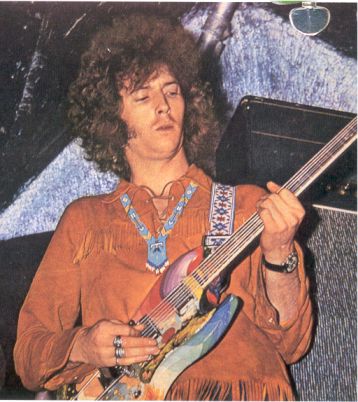
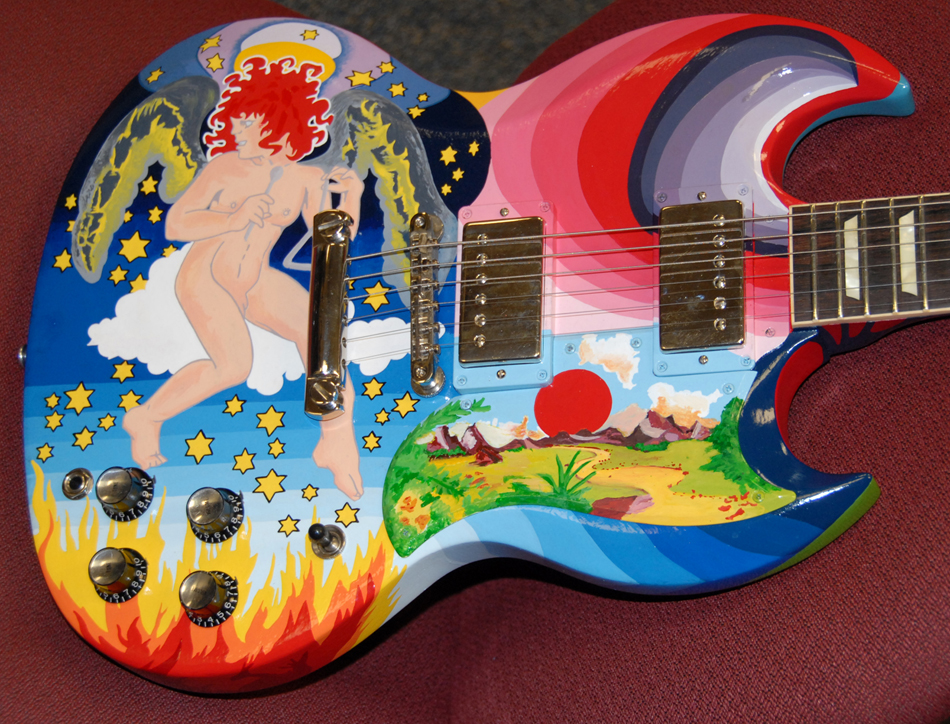
That's a Cream era Eric Clapton playing a Gibson SG known as "The Fool".  You might not be able to figure out what is more shocking, the crazy paint job on that guitar, or Eric Clapton's 60's Fro.  Either way, that picture does not really show off the guitar in an appreciable way.


The guitar itself is a 1964 standard.  If you read my earlier history on the SG, then you know this makes it a "Les Paul Standard" of that era.  Around this time there was a collective of Dutch artists known as "The Fool", and the psychedelic art movement had just come into full swing.  Being a friend of George Harrison, Clapton thought Cream should get on the bandwagon and do a theme based on their artwork for the upcoming USA tour they were planning.  "The Fool" did instruments for all band members, with Clapton getting this SG.  In fact, it was the love of this SG that caused Clapton to gift "Lucy"(a previous Legendary instrument profiled on this blog) to Harrison.
It was with The Fool that Clapton perfected his "Woman" sound that would dominate his music for decades.  Unlike some artists, Clapton often records with the same instrument he plays live, so many of the later Cream albums were recorded with this exact guitar.  After going through a few people's hands after Cream broke up in 1968, it landed in Todd Rundgren's hands for $500.  Todd had seen Clapton play the guitar live, and it was this guitar that inspired Todd to go into the music industry.  He kept the guitar for decades after, naming it Sunny because it was used to record Sunshine in Your Love.  Todd is most known as a record producer, with credits like Bat Out of Hell by Meat Loaf.  It later was sold for $150,000 but quickly sold a few years after that for $500,000.  It now resides in a private collection, but by someone that at least loves to bring it out for magazines and interviews. 


Day 48

We come from the land of the ice and snow,
From the midnight sun where the hot springs flow.
The hammer of the gods will drive our ships to new lands,
To fight the horde, singing and crying: Valhalla, I am coming!


We're snowed in here, and so the vikings marched while the snow fell.  Yep, more metal practice.  I'm starting to work my new rock phrases into the palm mute stuff.  I also plugged in the bass and tried my hands at making a matching track of that for what I'm playing.  

Also I found out something: Ted Nugent is a dirty dirty old man.  It turns out that his 70's stuff is very close to the way I play.  I mean, almost exactly.  He stays pentatonic, his hammer on flourish is EXACTLY like mine.  Stranglehold is one of the most awesome riffs in rock history and it is almost exactly the kind of playing I do when I'm practicing.  So if Ted Nugent promises to do certain sexual favors for you if you can play Stranglehold, he's not saying that its hard, he's daring you to take him up on the offer.

Dirty dirty Mot&(*Fu^k#@r


Monday, February 10, 2014

Spotlight Guitarcade: Gone Wailin' and day 46

Gone Wailin'


The first and most simple game in the Guitarcade is Gone Wailin'.  The game's premise is simple: the background is going to scroll, a wail is going to shoot you into the air as you make noise on the guitar.  Use this to collect bananas, avoid birds and islands.  The level is randomized and gets faster as you go.

Let it be known that I tried for all of 5 minutes(almost no time when it comes to me) to find what this game is based on.  I figured it was based on an old game like all the other games, but now I am convinced that this is just a take on the tablet/phone game Jetpack Joyride.  In Jetpack Joyride you touch the screen to fly up, and let go of it to fly down(the satanic Flappy Bird was not in existence when this game was made).


When I first played Gone Wailin' I thought it was fun but I also thought that there was no way this game would help me.  I thought to myself "I know how to make noise on my damn guitar".  I was stubborn in the early days and determined to take everything serious about Rocksmith 2014, and I am glad I did.  Eventually I realized that I had stopped banging on the strings trying to make as much noise as I could in a punk style, and ralized that its much easier to slowly strum and just maximize the amount of string vibrations.  That helped me when it came to chord work.  For beginners, this game is essential and I would not advise them to stop using it even past the 60 days.  Why?  Its a muscle builder.  My hands do not fatigue easily because of my prior bass playing experiences, but I remember when they did.  This game will help build stamina.

Also it really is fun.

Day 46

I've got a huge, nerdy post about bass amps coming up, but I feel like I've had too much bass coverage recently, and seeing as this blog is based on me learning guitar it feels a little out of place.  Bass has been a big part of my life, so its only natural some of that bleeds in.

Sore throat still going on.

I am now officially recognizing that I am getting better at guitar.  It is 46 days in, and I know I am much much better than I was when I first began.  Rocksmith has definitely helped me, not only with learning the basics, but also with keeping my interest in playing every day.  Too many times I used to think "well I have a lot to do, I can put that off till tomorrow" and just like the Credence Clearwater song says, someday never comes.  The chords I know are making their way into practice.  My power chords are sounding much less punk and much more 70's rock these days.  My busy blues style is learning to fill space with more than just notes.  I am not a guitarist yet, and I would not say I'm good at guitar, but I have improved from Day 1, you would not even recognize what I was doing on Day 1 as anything but "screwing around with a guitar".

I need to update my technique book.  I'm not doing a lot of song learning, just as I planned, so I only have one notebook to update.  I still have not committed as scholarly as I should, but I know myself and I know I can not resist making an "essay" out of learning guitar lol.  One of the first things I am going to do after Day 60 is get a "song writing" book.  Some of you may laugh at learning song structure and maybe even think "isn't that something you should just... you know... do?" and to that I laugh.  If you spit in the face of people that learned song structure through reading, then you should probably never listen to Led Zeppelin again.  I do not have a support network of musicians to just "tell" me how to do all things.  What's with this attitude of glorifying ignorance and putting down learning these days?


Sunday, February 9, 2014

Fuzzy Memories and Day 45


In the fuzz world there's a big debate between fuzzes.  Originally the most popular was the Fuzz Face, a huge, weird, round pedal with one thing going for it; Jimi Hendrix used them.  Thing is, by the time they became a "known" and that there was a large enough market for them, the Fuzz Face "formula" was changed to using a different chip.

You see, the original used a Germanium chip in them.  They were switched to silicon.  It is said that silicon chips were more sterile and less "warm", and so for many people this seems like a crazy decision.  You know who did not think it was a crazy decision?  Jimi's pedal man, Roger Mayer.  Roger has said in many interviews that Jimi would buy dozens of Fuzz Faces, spend a day figuring out which ones were "good" and selling or dumping the rest.


You see, when chips are made, they are made in wafers and cooked in a furnace.  The chips closer to the middle are cooked differently than those closer to the walls.  Germanium chips vary wildly in this aspect, and to get a consistent product, you have to spend many man hours getting them correct.  The market was not large enough in the 60's to warrant that.  Silicon chips are much more consistent, the placement of them in the oven does not affect them nearly as much as Germanium.  So this is the reason for the switch.

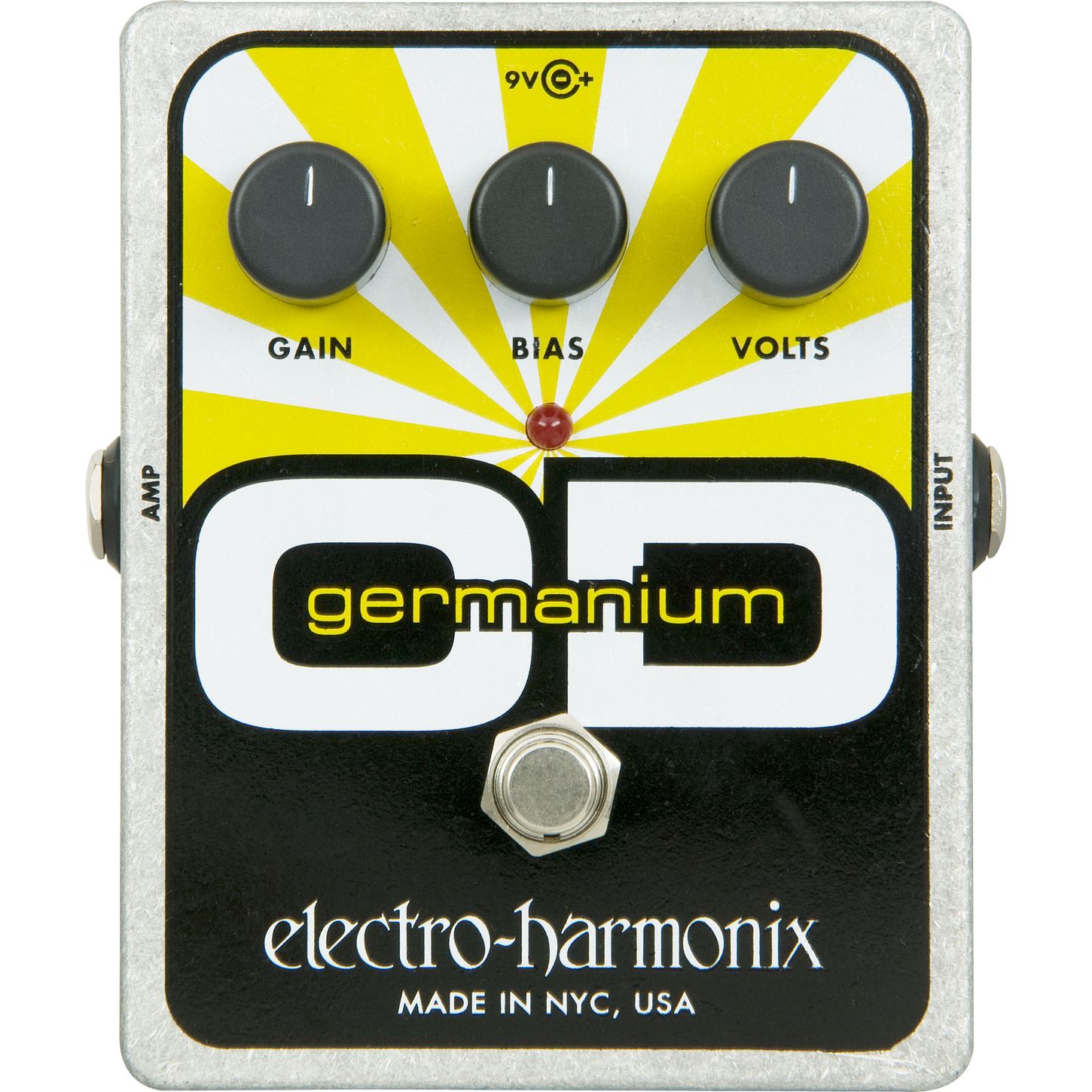
Remember this if you ever get into collecting or even buying pedals that use Germanium.  You can not really base your experience on anyone else's pedal, you really should demo the pedal yourself before getting one, especially if you're going to be paying 100's on an original Fuzz Face.  Big brands like Electro Harmonix claim to put in the time to find the "good" chips, but that does not mean there is going to be no variation.


Day 45 

Ugh, I've got a seriously bad sore throat.  It would not be so bad for practicing, but coughing so much makes my brain slosh around and gives me a headache.  So I basically just practiced quiet chords and unplugged blues and rock stuff.

I did plug in to Rocksmith today though, I'm pretty sure that's a condition of the challenge lol.  I had it turned down while doing my practice tracks(chords 101, 301, the Hammer on practice track) and played Guitarcade(string skip, chordead, Scale Racer).  You know, you get used to playing so loud you can't really hear your own strings all that much... but nothing makes you sound like a "newb" to your own ear than doing all this stuff with the twang of an unplugged in guitar lol.

That's one of the things I figured they should have done better with in the 60 day success story adverts on Youtube.  They should have recorded the sound directly and not so much with a mic near the player.  I think the players were even better than they sounded because the string sound was twanging around in the background while they played, and that just messes with people's hearing and expectations.


Friday, February 7, 2014

Youtube likes and Day 43

I debated on if I wanted to do this post now or not.  I have a feeling most people read these at work, so its probably a little boring to get a post of videos.  Still, this is sort of a shout out to those that are helping me and do not know it, and a little bit of a "hey check these guys out" as well.  These are a couple of youtube channels that are helping me.

Rob "Chappers" Chapman

His channel is probably 60% gear, 20% tips, and 20% vlog.  The best thing about his channel?  Watching them play.  No seriously.  Rob is a "metal" kind of player, and Cap-10 is a bluesy player.  They play practically the same couple of licks on everything they review, and they do it on purpose so you can compare and contrast the equipment.  This also means that you're learning and not even knowing it.  They aren't just showing off, this stuff is pretty simple to medium in skill requirements and their channel sound is amazing.

Marty Z


Marty Z does a lot of rock and blues, but I watch him mainly for his acoustic instructionals.  He's a laid back guy with good sound on his channel(this is more rare on Youtube than you'd think).  I like that he not only teaches you the "correct" way of playing, he teaches you "correct" variations on playing certain songs.  He's not a slave to doing it "like the artist" and I think that's an important lesson.  He's good stuff, his lessons are free even though he works for a pay website, and all around is really helpful.  He does a good mix of "pop" acoustic songs, but is really focused on 60's and 70's rock.


Day 43

I am quickly falling into playing Blues-rock and Metal(of the Doom/Sabbath varietal), which are two genres I really don't mind being practiced in.  Thing is, I love 70's rock.  So all yesterday when I practiced, I thought of 70's rock songs while playing and tried to match some phrases.  I was not trying to actually copy a song, because I'm not good enough to do that yet, but at least use it to get me into the mood of playing less blues inspired rock'n'roll and more pure Rock.  It resulted in a couple of new phrase recordings, so I'm quite happy about that.  It is still hard as hell not to fill "space" in the practice session with blues licks.  I really need to just learn some Rock licks.  Still, I'm trying to focus on basics all through the 60 day challenge, and not so much learning songs... after the 60 days though...  I have plans.

The "accents" lesson in Rocksmith seemed a little silly to me.  Rocksmith 2014 is amazing and they obviously did a lot of great new work on it over Rocksmith.  I read and watch comparisons and I really do not think Rocksmith 2013 was something I'd have stuck with.  Rocksmith '14 has the session mode, much better Guitarcade, and the Riff Repeater... I can't imagine trying to learn any songs from the game without Riff Repeater.  If you get 2013, just do it if you see it cheap and you want to import all the songs from it.

I would like to see some videos added for the Chord and Technique section of the game.  There's this "Tool Box" section you can access that is for quick reference, so I can see why they did not do videos on most of it, but things like "tapping" and "slap and pop" techniques should at least have a link to the Lesson on them.  Idealy just a quick refresher video so the player doesn't have to watch all the lesson again.  Something for the next iteration.  Really though, I am so extremely happy with 2014's edition.  They did not just sit back and do nothing to improve it.  I see now a competitor on the market that uses big names, selling them as "instructors" and presenting the songs as tabs on screen.  If I had never played Rocksmith I would think Bandfuse made a lot of sense.  After seeing it in action, I think that maybe the Rocksmith version of notes coming head on is a better way, but maybe I'm just used to it.  Not going to turn this into a Bandfuse review/bash though.  Just look at some vids if you're interested.  I'd still pick up Rocksmith 2014 instead.

Thursday, February 6, 2014

British vs American amp tone and Day 42

British and American tone

You see it practically everywhere when you are looking at instrument gear now.  Digital is pervasive, and since there are a lot of "amp modeling" going on, you have to describe the amp type without using proper nouns.  Even many tube amps now have a "American" and "British" switch on them to change their voicings.  What exactly does it mean?  Well the American amps of the late 50's and early 60's were clean sounding, while the British amps of the 60's brought in the more aggressive distortion.


(ACDC is a great example of pure British tone)


The Tubes:  A sort of, but not really, truth

Technical jargon ahead, skip if you want.  Marshall's first amps were essentially Fender amp clones.  They did not have the same tubes as Fender, but they did have similar ones that were sold surplus by the US military.  Soon they switched to more locally made KT66's.  By the time Jimi Hendrix was popular they were using EL34's because KT66's were becoming cost prohibitive.  Fenders almost exclusively used 6L6 Tubes.  The problem with this definition is that as you are aware, Marshall used 3 different tube types, and then Vox also introduced EL84!  Today it is accepted that EL84 and EL34 are the "British" tubes.

The Sound You Hear

The big Marshall change to their early "Fender" clones was that they tweaked the circuitry to distort much faster than a Fender.  These changes and the change of tubes essentially means that the "British" sound from a Marshall is a mid-pushed distortion that backs off on the bass and treble.  This is what you will hear with your ears, no matter what the tech jumbo says.  So "American" "Fender" sounds are boomy and chimey, with a smooth and light distortion.  Fender clean is very clear, very precise and ringing.  The "British" sound is mid-range aggressive, even the "clean" has a little bit of harmonic break up, making it described as "creamy" and "fat" and the distortion is stronger and grittier.


(almost always performed with a Fender Bassman)

Not so clear Anymore

When you see "British" vs "American" you really have to think about the music of the 60's.  Over half a century later, and there are amps from each side of the pond that do what the other is famous for.  Mesa and Soldano amps from America have distortion in huge amounts.  Vox, even in the 60's, made super clean amps in Britain that rivaled Fender.  Several amps now use BOTH types of tubes and let you switch between or blend them.  There are digital circuits and active equalization that can make the cleaner 6L6 tubes sound "British", and this is a common usage for them now.  Marshall even uses 6L6's in their big series amps because they are more even and you can EQ them to sound "British".


Day 42

Started out today doing the Palm Mutes and Hammer On practice tracks again.  It has been a while since I had done that because I was working up my skills through playing on the real amp.  The Hammer On is really more a timing practice for me, I'm pretty proficient in Hammer on usage already.  The Palm Mute practice track gets my speed and accuracy up.  I can kind of get into a relaxed, slow chugging mood with Palm Mutes.  I think Thunderkiss '66 is fast, and then I play the Practice track and realize I've got a ways to go before I"m "fast".

I keep alternating between practicing what I need to practice and practicing what I want to practice.  What I need to practice is academic and building of skill.  What I want to practice is all the song ideas in my head.  Both help with creativity and skill, but in different amounts.  I think academic basic skill building is about 70% skill building, 30% creativity.  Practicing my own stuff is 30% skill building, and 70% creativity.  Doing the academic gives me new skills to make more creative stuff, while doing my own stuff allows me to put my skills together in new ways, pushing me challenge my skill in ways that practice tracks just do not do.

For example: the hammer on practice track.  Its a ton of hammer ons.  Its me using hammer ons in specific ways at specific times, and pushing me to do them faster, more accurate, and in different combinations.  However, when I play my own stuff, I'm stringing hammer ons with bends and blending them with chords.  I'm saying to myself "can I do a bend, hammer on, then unbend, and slide?"  At first, probably not, but later on I work on it, and yes I can.

Its a balancing act, and I tend to fall on the "practice your own stuff" side of the balance a little too much.

Sunday, February 2, 2014

The Wall... and Day 38


The legendary Wall of Marshalls.

You know, there was a time where lots of speaker cabs were a necessary thing.  The old amps in the old days were not 100 watt, the speakers were not very efficient, and bassists especially needed more.  The Who famously got in battles over who could have more on the stage, as Entwhistle tried very hard to be heard over Towsend.  It takes many many more watts and speakers to be heard at the equal level on bass than on guitar.

The truth is, and its been the truth for a long time, any gig that needs this many speakers usually has a house sound system.  At Woodstock, Hendrix didn't need a ton of amps on stage.  Modern venues typically have a house PA system, and bringing a loud ass amp is usually frowned upon by the establishment.  I know that if you have not experienced what a 100 watt amp and a 2x12, much less a 4x12 can do, then you probably do not understand that it is insane to bring more to a gathering of a couple hundred, maybe even a thousand or two people in the crowd.

This is a famous picture making the rounds on the net, and it really does hit this point home.  There are so many bands that use these configurations.  Two sets of 4x12's and a 100 watt tube between them and you're good for like a mile radius to need earplugs.  I watch a lot of "when I first new I made it big" interviews, and more than one story is buying their first 100 watt marshall and setting off parking lots full of car alarms by cranking it and seeing how far it will go.  I don't own a tube amp, but I have a 550 watt bass amp with super efficient designs(makes an ampeg SVT4's 900 watts sound like a toy), and I've yet to be brave enough to go past 1/4 turn on the volume.  I even sat it up outside the garage once and my windows were still rattling, and the amp was set up blasting away from the house.  This is nothing compared to tube wattage.  Marshall and Trace Elliott have both made 300 to 400 watt tube amps for bass, probably the equal of a 2-3,000 watts of solid state.  Some of these Metal guitarists are diming 200 watt guitar tube amps on stage.  Wall of Marshalls or not, that's some loud shiz.

What I'm basically saying is, use ear protection

Day 38

Looking at funk, there's a couple of things I'm going to find difficult.  The first is going to be getting used to keeping the timing.  I'm actually really good at keeping timing when it comes to rock, and if I have a backing track I'm good at it with blues as well.  I've never had to do the foot counting while playing thing.  In fact, much of my playing settles around keeping complex patterns in my timings and "bring it all back" together while I improv.  Funk though is using much more hard structure than I'm used to, especially when the basics is wrapped in 16th notes.

I know from funk base that you play on the one "and have fun".  What that means is you always play on the first beat, its funk 101.  Bootsy taught me this, and also Larry Grahm, both videos from youtube that I used to watch a lot for playing bass.  Bass funk is less restricted than guitar funk, at least from what I'm seeing in the lessons.

I am going to have to break out the metronome built into Rocksmith for practicing the strumming.  That "funk" guitar sound in most people's head(when they're not actually thinking about the bass, which is 90% of what people think of from my experience talking about funk songs) is a 16th note, 90ish bpm high twang strum.  I'm finding most of it is in E.  I've also found that there is a Hendrix chord that they used a lot, E7#9 and I see myself playing around with that chord outside of funk as well.

Anyways, I'm only here for the basics.  I'm not devoting my time to getting deep in the funk as of yet.  I just want to be able to do the strum pattern with a chord or two, so I can do basic funk rhythm when I'm asked to.  I can do a blues improv around this strumming and get by sounding funky.  I'm broadening my horizons, not switching my specialties.

Friday, January 24, 2014

Straps and Kazoos and Day 29

I have a strap problem.


It is weird some of the things you realize about yourself.  I've known for quite some time that I try to get the strap that matches best with my instruments, to me it was common sense, something everyone does, right?  Well apparently I have something deeper than that.

My girlfriend and I were at the music shop earlier this week and looking at the acoustics on the wall.  They had 4 of the same model, just different adornments and cosmetic changes on the wall.  It is at this point I want to emphasize that they all sounded pretty well.  I looked at all 4 and listed them to myself "this one here is most like the kind of bass I'd go for".  It was made of a rare figured wood, with just a few adornments.  "this is more like the electrics I'd go for".  It had more Gibson-esque inlays and adornments with a solid color.  "I think I like this one least".  The least one had garish inlays all up and around the neck, and the body we very embelished with abalone, and even the color was a color I shy away from.  No way does this guitar say anything about me.


Then I went to look at the straps they had at the store, which were situated so that I was looking at these guitars while I looked through the straps.  They had the usual nylon, something I'd only get for a super pointy 80's guitar I'd never buy in the first place.  Then there was this why leather one with these tasteful, almost japanese styled flower imprints dotted here and there.  It matched very well with the garish looking acoustic, and suddenly if I was going to buy one of these 4 acoustics, the one in last place suddenly became a contender for first place.  It was then that I realized I had a problem lol.

Realizing a problem is the first step to fixing it.

I hope.

This is the part where I be a responsible example and tell you that you should pick a strap based on comfort first and looks last. But, come on.  That works if you're being all "zen master" but we all know its more "oh this looks cool... is it comfortable".  Its fine to go for looks, just DO NOT FORGET the comfort part.  Oh and its physics, if your guitar is hurting your shoulder because its heavier than you're used to, get a wider strap.  Padding can help, but not as much as adding an extra inch of wideness.


Day 29

So today I jammed out with a kazoo.  Yea, I'm surprised as you are.  There is actually a kazoo in the Session feature and its featured in a band i had to use for a mission.  My guitar has enough fuzz on it to basically be a kazoo, so sometimes it was hard to tell them apart lol.  It was a nice, uppity ditty in Pentatonic Major in the key of C I think it was.  Maybe it was A.  Not my cup of tea, but a fun experience none-the-less.  You kazoo players take heart, someone in Rocksmith is carrying the torch to legitimize your musical instrument of choice!

I also played in a "Newgrass" blues based country band.  I played in Pent Major again, but this time in G.  So far the key of G is my favorite for blues playing, so this was actually pretty cool.  I'm no where near as good with the Major Pent as I am with Minor though, but practice practice practice as they say.  Speaking of things in the key of G, I'm currently practicing transitions out and into G with the chords I already know.  This is going to open up several new paths for me, song wise.  I honestly can't remember if I have said this already, but watching a Foreign Film with Subtitles really helps me stay in one spot, and focus while I play through the chords.  I live in a world where since middle school they have taught multi-tasking as the "normal" resting state, and worked as a chef where the difference between good and bad is how well you can multi-task, so its hard for me now to sit there and do one task and not feel like I'm wasting time.  I know watching a film and practicing are technically 2 things, but it could be much much worse.

I really need to redo all my preset sounds.  My mainstay, based on a plexi/OCD overdrive sound just doesn't have enough low end to sound nice when palm muting, and also it has a little too much dirt for the kind of stuff I'm practicing with these days.  I still never got a fuzz I liked, but then again I'm not playing anything where fuzz fits all that much.  I think tomorrow I'm going to get a cleaner, fatter over drive for my primary, and a high gain "High on Fire" sound for a backup.


Thursday, January 23, 2014

Spotlight Guitarcade: Return to Castle Chordead and Day 28

Return to Castle Chordead


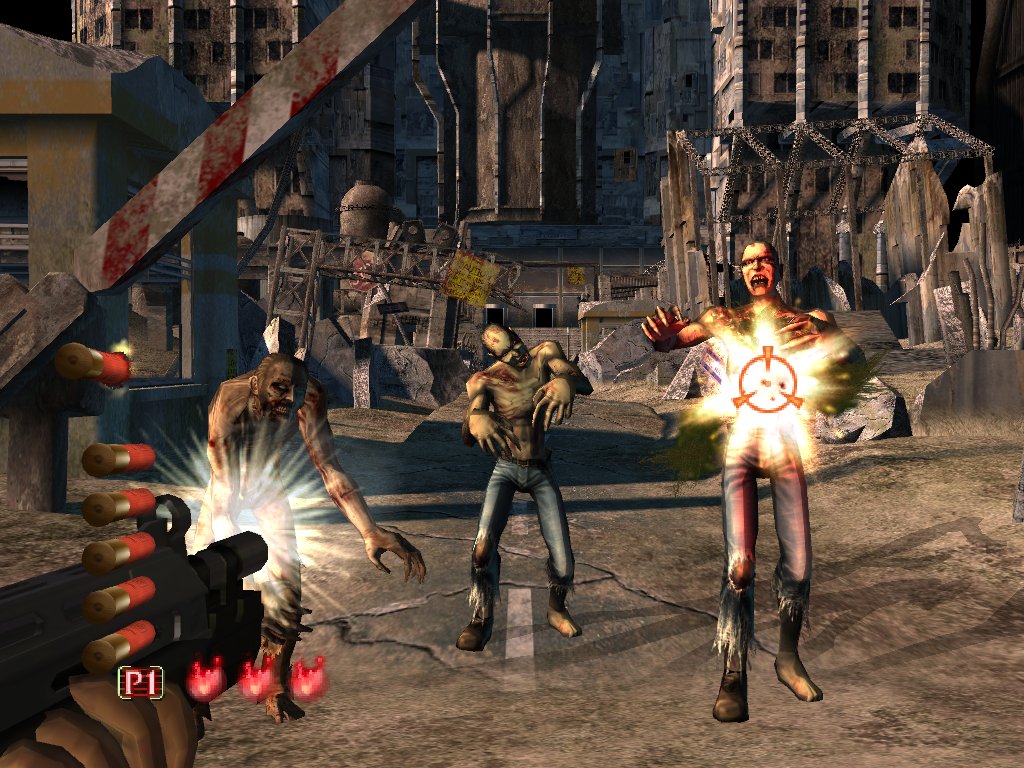
Return to Castle Chordead is a game focusing on helping you transition from Chord to Chord, while learning the chords.  In it, you have a sort of lightning guitar that will shoot the enemies as you play the chord that appears above their heads.  If it takes a while, the chords will start showing up in a chart near the enemy.  You "fly" through the level in first person mode, stopping at scenic areas while the enemies, in this case they are the undead, come at you.  Play the right chord, shoot energy at the undead, destroy them.

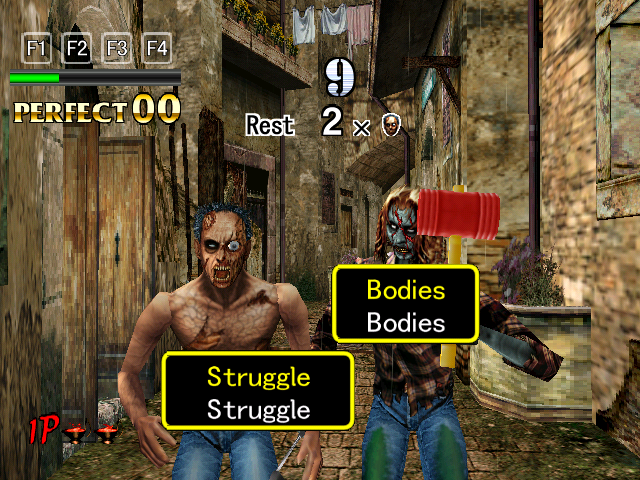
This game is based on the old rail shooter by Sega, "House of the Dead".  It is said to be "on rails" because you do not really control how you move, it is more like a roller coaster that stops while you shoot zombies.  This type of game has already been used in learning, as there is a "Typing of the Dead" series where you typed words and phrases to attack the zombies.


Return to Castle Chordead was a wonderful surprise to me.  I played it first because I had a mission to, and it was way back in the beginning days of me playing.  I thought I would be horrible at it, since I was horrible at the space shooter game.  To my surprise, I did really really well in the first game.  The graphics are right up there with the House of the Dead when it first came out, so I think it matches the style very well.  Return To Castle Chordead is super campy though, but I think that is very much on purpose.  It is almost a parody of House of the Dead instead of an homage.

My main problem with it is that you are not in control of the chords used.  I really think it would be much more useful if the difficulty was based on the enemies, not the difficulty of the chords, and you get to choose the chords if you wished.  I guess it makes it much more of a "game" to make you progress through though, so maybe its incentive to keep playing.  Still, this is a sort of minor criticism that could fit in a few games in the Guitarcade.

Day 28

Something new and awesome happened today.  I was at my girlfriend's house and she had the TV on as background noise while she made me a wonderful dinner.  I glanced up from my tablet and saw a girl playing the guitar in some commercial for the Disney Channel.  The cool thing was, I was picking out the chords she was using.  I was doing it by sight, and I was recognizing the way she was holding her fingers.  This is really cool to me, and it makes me excited about my musical future.  One day I hope I could do that by the sound alone, but biology may have made that impossible, at least I could watch someone play a song and learn it by watching instead of having to look up notation or "how to" videos.

I am finding that saying the chord is really helping me while I do my stuff in Rocksmith.  I am used to video games, and there was a time I played some Guitar Hero.  The colors come and go and you're not worried really about remembering WHAT the color is, only that you pushed the button are are waiting for the next color.  Video games have conditioned my brain to a certain way of learning.  Some how, when I say "E minor" or "A minor" its getting stuck in my brain that I'm not playing a game, I'm learning guitar.  I also kind of equate this habit with being able to watch other people play and recognize their chords.  Instead of thinking "oh that's the part of the practice song here where I do this" its "that's an E minor".  I don't know if I'm really describing it correctly ir explaining why saying it helps, you'd think that's be like saying "looking at your fingers helps", that it would be something you'd want to eventually ween yourself off of doing.  I guess it is just making it feel like learning and less like performing the correct procedure in a game.

A few days ago I went and bought a few things for my musical stuff.  One of the things I picked up was a 1.14 mm gauge pick from Dunlop.  When I first started I got the "medium" gauge Fender picks.  A few years back I wanted to try picks on my bass, you know... cause sometimes you just wonder.  Anyway, I had several left over and I've ended up using a .88 dunlop since I've started the Rocksmith challenge.  Well, I have to try the extremes, I can't see myself ever liking anything flimsier than a Fender "medium", so now I need to find the top.  This 1.14 has basically no flex to it.  The attack this thing makes(the strike through on the string) is really intense.  I do not thing I do chords very well using it, but I really like the sound my blues playing sounds with it.  I like it, but I really think that .88 is what I'm going to stick with.  The .88 picks are still very stiff, but not so stiff they make chord strumming too distinct.  With the 1.14 I was almost sounding like I was quickly arppegiating the chords.


Tuesday, January 21, 2014

Guitarcade Spotlight:Scale Warriors and Day 26

Guitarcade Spotlight: Scale Warriors


Scale Warriors is a scale practice game that focuses on you playing the notes in different orders and different amounts.  Every enemy of a type has the same patterns to them, so eventually you can combo kill them without even needing to see where they are standing.  Each successful note has your character jumping to the enemy and punching or kicking them to the next note.


The game takes its inspiration from the old 8 bit era beat'em ups like Double Dragon and River City Ransom.  The bad guys are a gang that has wronged the players, and you must proceed through "stages" where you fight regular bad guys and eventually special "boss" fights that have extended scale sequences.

I really wanted to like Scale Warriors, it was probably my most looked forward to game in the Guitarcade.  I am a scale playing nut, so I thought I'd play the hell out of it.  The reality is that I have not, as of yet, played a lot of it.  The Scale Racer game, to be spotlighted later, is better at teaching scale shapes IMO, while Scale Warriors is made for improving your general note playing abilities, and developing muscle memory patterns.  I think they have the games listed backwards when it comes to recommendations, I think Scale Racer should be first, and then you do Scale Warriors after.  As I learn new scales, I will use this game more, I think.

Day 26

I did quite a few things outside of Rocksmith today.  Last week Rocksmith got a lot of new Oasis songs to play, and there's one included with the game already.  I've seen that Wonderwall is made much easier by having a Capo, so I went today and bought a Capo.  It is really weird for me to own a capo.  Growing up, the Capo was this thing you got in your "starter" kits, but never knew exactly why to use it.  I don't remember a single friend ever using a capo.  So the fact that I know why to use a capo makes me a bit happy.  Also, if you have read this, I bitched about a lot of songs I want to play are in E Flat.  My brain actually lit a few sparks, and I had this question: If I tune E Flat, and use a capo on the first fret, isn't that being in E now?  So I shot the question to Google, and I was correct! You can, indeed, do that.  All the more reason for me to own a capo.

I'm working on going backwards through my scales in a musical way.  I can walk up and down my scales pretty easily, and I can make music with them and all that, but going from the B string to the G is just not as smooth as when I go the reverse way, or when I do E to A in the Pentatonic minor.  So I don't really need Rocksmith for that practice, I watch Yogscast videos on youtube and just absent mindedly practice this, committing it to muscle memory.

I also bought a 70's tastic looking journal and some colored pencils.  My brain works better when I write things down.  You can tell me a whole list of groceries 5 times in a row, and ask me to repeat it once, and I'll probably get 2 or 3 right.  My brain just doesn't store info like that.  I write the list down, and I'll be able to tell you, probably in order, 3 weeks from now, the entire list.  So that's what my journal is going to be, Skypp-notation on chords and scales.  Oh I have books, especially bass books, that talk about all this too.  But writing it down will help me out immensely.  Maybe it would help you too?  Try it out.

I did get some session play in at the end of the night.  Probably about 30 minutes?  I don't know, time flies when I'm in session mode.  Still, well over an hour of practice and guitar-study today.

Saturday, January 18, 2014

Solid State and Bass, also Day 23

The first question people will ask on this subject is "what is the difference?" and from a technological point of view, Solid State amps use diodes and transistors instead of tubes for their pre-amp and power sections.  There are hybrids, particularly with bass, where there are tubes in the pre-amp section and solid state in the power.


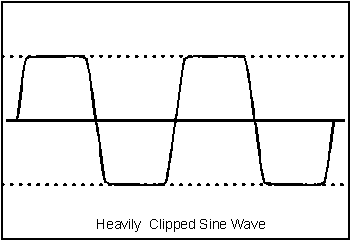
The problem is that a solid state amplifier will not compress a signal once the signal goes beyond what the design is created to handle.  Tube amplifiers will round off, compress, and fatten a tone with lots of harmonics, and send this signal to a speaker and it creates this magical "guitar" tone that we know today.  In a solid state amp, this signal is hard clipped.  It turns a mountain into a mesa, with a fat top.  You send this flat top signal to a speaker, and it makes the speaker want to destroy itself.  Well, not really, but a speaker is designed to move in and out, not to move out and stay out during the "flat" part.  This causes a speaker to malfunction.

Now why in the world would anyone want to use solid state?  Well, they cost less.  Their parts are manufactured for a myriad of electronic gadgets, so you can get the pieces and throw them together.  They also are more reliable, as there is less heat, and more stable parts used, in general.  There is another section of people that like them, and that is people wanting 100% clean tone.

The non-compressive nature of Solid State means that there are not a lot of overtones introduced to the signal, you have a pure clean tone.  Sure this kind of sucks if you want a creamy, rich, bell tone from your clean channel, but if you're applying a lot of amp modeling, effects pedals, or computer modulations, then a solid state signal is the "blankest" of canvases.


Then there are the bassists.  Bass takes A LOT more power to get the sound out into the audience than guitar does.  Some bass amps with tubes get up to the 300 watt range, but that's pushing it.  These monsters weigh over 100lbs without a speaker cab.  While on the solid state front you can get into the 1,000's of watts for under 1,000 dollars and under 20 lbs.  Now, 300 tube watts, when they are overdriven, can get insanely loud, but you're losing some of your "clean".  Solid state provides the largest, cleanest, most defined headroom for bassists.  There are other things to take into consideration, wattage is not a guarantee of volume, and the type of power supply will influence the sound as well, but in general bassists are much more accepting of solid state than guitarists.  Because of that, bassists now have literal pocket sized amps with 500 watts, and 4x10 speaker cabs that weight under 40 lbs.

Day 23

I warmed up with my Guitarcade as usual.  I also played some of the game based on Bending.  While still kind of inaccurate, the game did prove to be fun.  I think for a beginning guitar player, they should have stuck to the thicker strings further down the neck, because nothing will give beginners blisters faster than bending on the B at the 12th fret.

Anyway, I did the harmonics lesson.  Harmonics on guitar seem dreamily easily.  I wish they were this easy to do on bass guitar.  In bass guitar, harmonic play is like a top tier thing, up there with piano-esque tap play.  Jaco made himself legendary by making it a hallmark of his playing.  On guitar they almost seem effortless.  I know the lesson said that not every spot on the neck will make a harmonic, but it seems that just about any spot did.  This is not true of bass either lol.  Anyway, I got through the lesson pretty easily, but that might be because of my prior bass practice in the subject.

I did a lot of "amp" practice today, meaning I did it w/o Rocksmith.  It is just easier for me to practice scales and the songs I know with my amp.  I have a 25 foot guitar cord, and the amp is in a more convenient spot.  So I start a movie on netflix, put the amp on clean, and practice scale runs while I watch the movie.

I am really feeling the need to learn more blues-rock and rock style playing.  I keep doing the bluesy stuff I have practiced with for years, and I'm wanting to learn something new that I can improv in.

Tuesday, January 14, 2014

Play what you like, even if you don't like it. And Day 19

Forgive me if I've ever given you this "speech" already.

I did not consider myself a "bassist" until I had this strange set of revelations.  One of these revelations was that I should embrace what I find fun to play.

I know that seems weird, but I have to explain a little.  I'm probably notorious around my friends were hating radio.  I really can't wait for 2 or 3 songs that I don't care for to get done for 1 tolerable song.  This means that it is hard for me to focus on learning any songs I find blah.  This also means I don't like playing "blah" bass lines that exist in a lot of classic Rock or the genres I listen the most to.  Its my flaw, I know I suck more because of it, but I try to live with it.

About 6 years ago I was turned on to "jazz improv" bass by the Talkbass forums.  I have to tell you, I can't sit and listen to this stuff really... but holy crap do I love to play it.  How can I explain that without sounding like a jerk?  Maybe its like the people that will play sports, but hate watching it on TV?  Maybe it reminds them that they should be doing it rather than watching it?  I do make myself sit and listen though, for learning reasons.  It has probably made me what people would call a "busy" bass player.

I read that John Paul Jones used to listen to horn players and that's how he got inspired for his bass lines in Led Zeppelin.  So I immediately got on Youtube and looked up the horn player I knew the name of, Louis Armstrong.   I also branched out.  The silly thing was, I forgot to go back and listen to more Led Zeppelin.  This came later with another "revelation" I will write about later.  By listening to that, I began appreciating the older "golden era" of horn player's music.  I also became a much better bass player, and learned a very clean, "poppy" sound as I tried to come closer to the sounds I heard on the jazz.

Anyways, all of that is to say, play what you find fun.  Sure, you've probably heard it, and you've probably thought "well yea, play what you like not what other people like" and I say YES BUT, maybe you find something fun that you don't like.  Play to your strengths.  You may love Punk rock, but you find you hate the bass lines.  You may despise Surfer music, but find tremolo picking to be tons of fun.  Play what is strong for you and it will make you practice more, and eventually you can work your style into the genres you like.

John Paul Jones works his motown inspired stuff into the heaviest rock that Led Zeppelin does.  Flea brought funk bass into punk rock.  Brent Hinds of metal band Mastodon is a bluegrass banjo player.  I have, on several occasions, brought my improv jazz into blues.  I am currently bringing the only thing I really know decently on guitar, simple blues riffs, into chugging palm muted metal.  Play what you find fun, play what is strong for you in technique, and then YOU can make it the genre you wish you were playing.  You may find your own voice and bring something new to the world.

Day 19

I'm not going to lie, I did not get a lot of playing in today.  I had jury duty and after I got home, I took a nap.  I used the guitar unplugged for about 30 minutes, noodling as I waited for lunch to get cooked.  Practiced the stuff I've been practicing lately.  I did play 1 game each of my "warm up" Guitarcade games.  I also played some of the Scale Racer.  I love the look of Scale Racer.  It reminds me of Rad Racer, a game I played a  lot in my youth.  Scale Racer is the kind of game that is going to help me learn scales.  I wanted Scale Warriors to help so badly, but I'm more focused on getting the "game" correct than learning anything.

I did get some practice in though, so I count that as a triumph.  You can take it as you will.

Thursday, January 9, 2014

Explaining Lag Part 2 and Day 14

Lag Part 2, if you're looking at this first, then go here for part 1

Lag Part 1

Television Lag Reduction

Some TV brands have a special "video game" mode that will switch off all the fancy filters and processing so that it reduces video lag and improves game to button reaction times.  If your TV does not have them, then you need to set up a visual mode for it.  I can't help with every TV, you're learning guitar, I have faith in you being able to figure out your TV.  Just go through and turn off your cinema modes, your auto-colors, your dynamic contrasts, your dynamic volume.  Digital noise reduction is a HUGE no no when it comes to gaming.  After all of this, you may need to use the Lag correction option inside the game to slow down or speed up the game, depending on how much an improvement it makes.

Signal Checkpoint Reduction

As I mentioned before, you can have a long chain of goings ons.  The worst that could happen in a typical home would look like this:

PS3 > HDMI > TV > HDMI > Receiver > Speakers

That's got the signal being Encoded and Encrypted twice, de-crypted and reshaped twice, and converted at the end.  We have to cut down on this.

Best option  to reduce audio lag is to not use digital audio at all.

PS3/360 > analog cables > Receiver > Speakers

The PS3 and 360 can output analog, your Receiver/amplifies the signal to your speakers.  The Receiver can be a stereo unit with an input, it can also be some headphones.  Every PS3 comes with a set of RCA cables.  You only need the white and red audio ones.  You can then go into sound options and choose your system to "multi-output" so that audio comes from your HDMI and your Analog connection.  This will cause an echo with your TV, so simply mute your TV and listen to the sound coming from your Stereo/Receiver/headphones.

The problem here is that not everyone has a receiver(I don't) and perhaps not every stereo has RCA connector inputs(mine doesn't).  Here is what you need:

RCA Female to 3.5mm Stereo Plug

It is less than 50 cents, and shipping is under 2 bucks.  I hook my White and Red audio cable into that, put it in my audio-in(MP3 player hookup on some stereos) and I'm set to go.  Alternately you can use this to plug into your smart phone and record yourself playing very cleanly.

I can confirm this works.  The game's lag feels similar to my actual amp's lag, which is pretty imperceptible to me while playing cords.  Without this set up, using HDMI sound, the delay would mess up my strumming patterns, and I could not play as fast as I was able because the delay kickback would bother me.

Here is a component cable for the PS3 that will work, its under 5 bucks
5 point Component cable for PS3

Use that with the RCA>Stereo dongle, and you'll be doing great.  Remember you have to activate the audio to be sent in both signals using the PS3, and you'll want to mute your TV so you don't hear echo.

EDIT: If you have speakers for your computer that are plugged into a power outlet, then you have a "receiver" built into them.  You could plug the stereo jack mentioned above into them and it will be just as good as the connection I personally use.

Day 14

Holy crap 2 weeks?  It does not feel like I've been doing this for two whole weeks.

I am working on learning a song inside Rocksmith.  I have not chosen which I want to do to 100%, but I'm trying several different ones.  I have to really like the song to put this much effort into it this early on.  I do not think I can get 50% difficulty and be satisfied till later.   Candidates so far are Last Dance with Mary Jane, You Really Got Me, and Sixteen Saltines.

While auto-wah>chorus>reverb made me feel like a rock star, palm mutes and power chords make me feel \m/etal.  I am a huge 90's metal fan.  I basically considered Dimebag as my less well behaved older brother I never had.  My friends and cousins used to watch the Pantera home videos, it was like Jackass before Jackass in a lot of ways.  Lots of metal that I find I like does not have the super squealy guitars like the 80's metal, it has the palm muted chugging riffs of the 90's.  I palm mute practiced for at least an hour today.  Pretty much the same things over and over, but that's how you get muscle memory.

I have a leg up on the Power Chords.  I knew how to play "Brain Stew" by Green Day for years.  It is a power chord, and so my fingers already have that shape memorized.  I have also used that shape while practicing the intro to "Clean My Wounds" by Corrosion of Conformity, a riff from their guitarist Pepper Keenan.  Pepper Keenan is one of the top riff masters of today, you can also hear him doing the slow/sludge thing with Phil Anselmo in the metal super group "Down".  Look up Stone the Crow and Eyes of the South for songs by them.

Tomorrow will be another day I can devote several hours to playing, and now that I have my new lag-free set up, I'll be wanting to put it through its paces.

Wednesday, January 8, 2014

Explaining Lag Part 1: and Day 13

Explaining Lag.

Ok, I'm going to come at this from a semi-starting angle.  When people talk about games, there are several types of lag.  One is internet lag, this is caused by a slow connection.  Ideally this should never come up in Rocksmith, awesome, one less thing, right?  Ok.  The next is graphical lag.  Unless you're playing on PC, there's not really much you could or need to do.  The 360 and PS3 versions of the game were tweaked to make them work smoothly.

The one that Rocksmith has to deal with is Interface lag.  Technically the previous two types can cause this type as well, but as I said, not a big issue with Rocksmith on PS3 and 360.

Signals come in two basic forms, Analog and Digital.  Analog is a way of turning wave patterns into electrical patterns and back again.  The conversion is generally imperceptibly fast in doing so.  The problem with sending these analog signals is that certain wave patterns can get lost, static wave patterns can be introduced, and even outside signals can interact with them.  Put your phone beside a computer speaker, you'll start hearing a "beep beep beep".  Because of this, there ARE better, more expensive analog cables, an entire industry has arose around providing better analog connections.

Digital signals are these waves patterns converted into ones and zeros.  These ones and zeros can take up alot of space in the digital world.  Most are "compressed", made smaller by reducing similar signals, so that they can travel over a medium.  There's another thing that will many times come into play, encryption.  Netflix, Redbox, and all the Bluray people do not want you to be able to record their content while it is going through a cable.  So the signals are encrypted.  After all of this, the TV gets control as well.  Compression can cause low resolution videos to get splotchy, so manufacturers put filters to reduce it.  Colors could be set up for your specific screen, so now the manufacturers add color toning, skin whitening.  The audio might be 5 or 7 channel audio, but your TV is 2 speakers.  Now they have to convert that, and many times emphasize the signal that is used for voices.  So you have signal production, signal coversion, signal analyzing and compression, signal encryption, signal travel(speed of lightish), signal reception, signal unencryption, signal uncompression and reassembly, signal alteration, and finally signal output.  Got digital out from the TV to your  speaker system?  Well add ALL those steps again before your digital reception device outputs into analog speakers.  All of this takes milliseconds each... but add up to have pretty significant delay.  I am even missing a few steps here, but you get the general idea.

The bonus is that there is no such thing as "better signal" from more expensive cables.  High grade HDMI cables are a rip off.  Digital signals either work or don't, there is no signal loss.  If the cable is long enough(we're talking multi-room length), there will not be a shitty signal at the end, you'll either get 100% full audio/visual or 0%.

That's all for today.  Tomorrow I will talk about reducing each type of lag.  If you are reading this on the bleeding edge of reality and want answers NOW, then read the insert that came with Rocksmith or go to Ubi's site.


Day 13

Kind of long, I played a lot today.  It was 4 degrees outside my door today, which is strange this close to "Hotlanta",  So a lot of stuff to cover...

I think I may be coming to a crossroads here.  I have been purposefully going slowly through the lessons and not going through the other stuff fast either.  I wanted to make sure I had the basics down before really getting into the stuff I can not do.  Also, playing songs at an elementary and unrecognizable level is not fun for me, and I do not feel accomplished.  Add to that my notorious dislike of spending time on music I do not care for.

So, I have choices.  I want to continue using the Guitarcade for practice, and I want to continue doing lessons that matter to me.  The thing is, I think there is a lot of songs that will help me out a lot more than what is included on this disc.  Is that still keeping with the spirit of the 60 day challenge?  Is there a point to keeping a blog for the challenge if I'm deviating?  There are songs that interest me on the disc, there's a lot of them, there's also like 20+ DLC songs that would interest me.  I just do not know if I"m good enough to even attempt Thunderkiss '66 or Mary Jane's Last Dance.  Like I said, the game just giving me random bits and pieces pisses me off more than helps me out.  If its a freakin' power chord, give it to me; I can do power chords.  Don't make me prattle away.

What songs do I want to learn?  Well, I learned about a few Pentatonic based songs that I have played a long with in Youtube(without actually learning the correct sequence to the notes, but knowing they "fit" in with the music).  There are also a  lot of simple chord songs that would help me out on that end, and they just aren't in game.  I'll think over it tonight.

Today in lessons, I worked on the Hammer On/Pull Off practice track a little today.  The next lesson was Tremolo picking, and I found out that I could not care less about Tremolo picking.  I have always hated 50's surfer music and beach blanket bimbo style cultural stuff.  So yea, I'm not going back to tremolo picking any time soon.  I did, however, do the lesson on palm muting.

FINALLY.  A new breakthrough.  The first since day 01 I would say.  I always wondered how people like Rob Chapman, and every metal guitarist ever, got that "thud thud" thick sound.  The video showed me how I was supposed to be using my palm to still allow sound through, but make it sort of muffled.  I had always though "Palm muting" was just a regular mute technique, nothing really musical.  This lesson kind of made me feel dumb, but I am glad I finally know.  THIS I will have to practice, THIS I will be using in my own playing eventually.  THIS is what i have Rocksmith for.

TIP OF THE DAY
Listen to them when they tell you that tensing up actually works against Tremolo picking.  After giving up on the lesson, I did practice just relaxing my hand "just right" for the picking to work at all.  To my surprise the notes got faster, rang out clearer, and sounded more accurate.

Sunday, January 5, 2014

Gotta beat this level! and Day 10.

There are some things I need to wrap my mind around in this new kind of format of "game" learning.

As a gamer I have this achievement habit, and I don't mean just the "chieves" that are now on consoles.  This goes further back.  This is the desire to stick with a certain level of a game(like Mario world 5) until I get through it nicely, and then use warp tunnels to never have to deal with that shit ever again.  If you go at music like that, you're going to suck.

A song is not a level.  A practice track is not a level.  You need to keep at them, you need to be able to do them without notation in front of you, and without Rocksmith telling you how to play.  That's the point of this, right?  You want to learn guitar, not learn how to play a "game".  I still go through each practice track at least once a session, and I go through the newest one 100% perfect twice.  I focus on not getting it "right" but making it sound good.  Making it sound good is just as important.  You might think "its a practice track, what does it matter" and I say that if that's your approach, you're making things harder on yourself.

Unlike a certain infamous Guitar Hero episode on South Park, you will not be asked to remember one of those songs to play without the game.  That's isn't the point of Guitar Hero.  Committing songs and riffs to muscle and mind memory is very important, and doing it with the smaller and easier pieces of the practice tracks is a good start.


Day 10

Had a frustrating day today.  I'm no stranger to bends on an instrument.  I have particularly strong bends because I typically play bass.  I don't just typically play bass, I use Lo-Rider strings that have lots more tension.  When I demo a bass at a bass shop, the strings seem like loose springs to me in comparison.  I don't know if the game was just having a hard drive detecting them, or they have an insanely tight tolerance for bends.  I was so angry at the Bends lesson because rage-quitting and doing something else more productive would mean I have to start the lesson over again.  So I finally, with lots of cursing, got to the practice track, completely ignored and worked on some riffs I have been developing, and turned the game off after the save.

The whole day wasn't wasted, I did my usual warm ups, and got new high scores in each of my warm up games.  My errors with Duck Redux seem to have been from me fretting too hard.  I do not think that's the only problem, I think Duck Redux is flawed in that aspect, but I am able to play again accurately by using a light touch on the E string above the below the 5th fret(towards the headstock is below in music notation).

I'm starting my march toward the chord lessons.  Its time to face the beast.  I was supposed to start learning songs today too, but I did not get around to it.  I got more than my hour in(I've yet to stop at one hour in all the days so far), and I'll get started on songs after or during my chord training.

Saturday, January 4, 2014

Tools and Day 09

I know that there are a lot of Mom and Pop stores out there that are struggling to make a profit, especially if there is a music mega-store around the corner.  Many guitarists make their money off giving lessons.  Face it, the only way 99% of guitarists can make any sort of income from their playing is by teaching others.  So I understand when something new comes in and threatens that source of income.  I remember when DVD instructional videos started to actually use the DVD format to make something useful(I own a few DVD's that are just run throughs as if they are just VHS's).  There is this knee jerk reaction where I see a lot of backlash against new teaching tools, and I find it ridiculous.

I've seen forums with lots of guitarists(and bassists) of all types, and whenever anyone asks a question on how to learn this or that, there is a lot of "find yourself a teacher or you'll do it wrong".  That's the #1 go to answer.  I can tell you that nothing is more useless to someone at home seeking advice than to be told to get professional advice.  Then, mysteriously when I go to these advice giver's profiles that they are advertising all over their pages that they are available for hiring.

Just saying, there is a lot of self interest out there.

You go to Youtube and watch the "60 Day Success Stories" for Rocksmith, and in the comments you see these people, "this game is shit, look at the shitty technique this person is playing"  or "if you got a real teacher you'd learn this in 30 days", "so he learned a song in 60 days, I bet he couldn't make his own song that didn't sound like shit".  The usual youtube vitriol.

Then I found this guy on youtube(unfortunately I'm having a hell of a time re-finding him even in my History) where he talks about how he offers a "Rocksmith Course" to his students.  They buy the game, and he uses it in their lesson plans, and I"m thinking "This guy is genius, this is the kind of teacher I'd look for".  One of the things missing from Rocksmith is a live tech you could contact and ask questions to.  It would also give someone better direction on what they're supposed to be doing.  He did not look at Rocksmith as a competitor, he looked at it for what it is, yet another tool to help students learn.  You knowwho IS NOT offering a Rocksmith assisted guitar learning course?  Your competitors.

BTW, I am not payed to do this blog, I don't have advertisements enabled, and I know no one that works for Ubisoft.  I just get angry at the rejection of technology, and when it comes to guitar, there's a lot of that.  Bassists seem to be much more accepting(neo speakers, solid state, class D switching power amps etc etc) of tech and maybe that's why I identify myself as a bassist first, and guitarist 2nd.


Day 09

Had some unique fun today.

I did my new warm up routine(look at day 08), and then I let my girlfriend try out the Guitarcade games.  She is a cellist and a kick ass Guitar Hero player.  I figured that the first couple of games would be fun for her.  Gone Wailin' was her favorite one, she probably could have played that one all night long.  Its day 09 and I still have lots of fun with Gone Wailin.  I mainly chase the "achievements" as you can get super far and not get a lot of points, or you can play for a long time and not really get satisfaction.  It has helped me too.  You get the most reaction by going through the strings, and its fine to do it with a lighter touch.  It has made my strumming much lighter and tighter.  When I first started, I was trying to punk rock it, and then have to retune my guitar after the game ha.

She also played String Skip Saloon, and also complained about the strings being "mirrored" and not like written music.  So I don't feel like a complete idiot. Oh and I did reverse it and try to do a lesson... I didn't like it.  So I'm stuck doing it the default way.  I really can't decide what I would recommend with a new player... it IS easier when doing lessons, but it is opposite how new players will be exposed to non-game written music.

Played some session play for a while.  I really need to learn to do the "funk" strumming.

I am having the hardest time getting a fuzz tone that I like.  I have known for a while I would have difficulty with that because every company makes like 20 fuzz pedals(except for Boss).  Hell, Devi Ever practically made a company out of making fuzz variations.  Currently I am using(and not 100% liking) a Buzz fuzz 2, hi-lo filter to make it decay, and a bass boost 5 EQ pedal in the loop to put some heft back into the signal.  You'll be hearing a lot about my look for my fuzz tone.

Friday, January 3, 2014

Is this a game? Also Day 08


Is this a game?

Well, it certainly has "game" in it.  The Guitarcade section definitely has some fun games.  This is definitely not a Rhythm game in the same sense that Guitar Hero was.  Guitar Hero was made for you to feel like.. a Guitar Hero, while hitting buttons according to music track ques.  All the games in the Guitarcade are there to have you practice something, so there is not really a way to play Return to Castle Chordead in a more casual non-chord way.  You can't get a room full of random people and throw the controller(your guitar) around and have fun.  The Song Learner in "easy" setting is mind numbingly boring because its not filled with un-needed taps, every thing you play, even on "easy" is a part of the song.  Duck Re-dux is close to Guitar Hero in technique, but there's no cool music to go along with it.

I would say, "do not look at it as a fun game where you learn guitar".  I would put it rather, "A way to learn guitar, with some games involved".  There's a huge difference there, and I"m worried some people will get it, not find a way to have fun with it, and then give up.

I played Guitar Hero, and even had a version of it.  I got some fleeting feelings of playing guitar with it.  I saw that ACDC released a whole sub-game of songs for it, and immediately wanted to get it.  But then I remembered that I want more.  I don't want to feel like I play guitar, I want to actually play guitar, and in the end, playing the ACDC songs that I've always wanted to play will feel hollow.  I had a real guitar sitting next to the TV that was like "play with me".  I know not everyone really wants to be a guitarist, but I do, and RockBand and Guitar Hero just felt like wasted time unless I was in a group of people just trying to have fun.  But that's personal, that's for ME.

This Rocksmith, this "game" is exactly what all the guitarists that bitched about Guitar Hero were saying they wanted.  Plunk this down in a room of friends, and they're not going to have fun.  Get a room full of guitarists and... well, you'll have spilled beer.  Taking turns at Guitarcade games will be fun, but I think some people might get self conscious about the amount of guitar stuff they know and suddenly want to use the Jam Session.

Maybe for Rocksmith 2016 they will add a "Guitar Hero" difficulty setting.  You could pass the guitar around, and have it so player 1 tries it at 88% difficulty for real, and players 2 and 3 has Guitar Hero difficulty set up for the first string use only?

Just a thought.

Day 08

Wow.  This Rocksmith can make you feel like a million bucks.

I did the mission today where you play in three different keys, using the Pentatonic Minor.  The game suggests you try the bands Hard Rock, Acoustic Blues, and Garage Electric.  I first started with the Hard Rock, and the game gave me this auto-wah, phaser sort of effect.  I almost switched over to my pre-set distortion, but decided to give it a go.  I felt like Jimi at Woodstock.  There is a saying about wah pedals and hammer-ons and feeling instantly like a rockstar, and I never understood it till last night.  The band did its incredible thing, and I figured out where the band was going to drop out and just have the beat going, and at that point I started soloing on the highest string... wow.  It felt good.

Then I did the acoustic blues, and again, I came up with something I loved.  It is almost impulse to grab my recorder.  Another hobby of mine is writing, as in words on paper.  If you ever have an idea you are encouraged to write it down, just in case you use it later.  I've had lots of notes brought back into my writing, so I have this habit of wanting to record every jam.  I gotta remind myself that it is just jamming the pentatonic scale, its ok, its not mind blowing.

I know I suck.  You know I suck.  Chords show I suck.  But for a brief time, I'm feeling awesome and accomplished.  That's worth the price of admission.

I think I've nailed my warm up routine down to playing Gone Wailin' to get my muscles warmed up.  Then Duck-Redux so that my brain is working on the fret layout, then I change up which i play next.  Its about 20 minutes of warm up time.  Then I do a quick session run of riffs I enjoy playing.  Then I decide what to do that day.  I have not had to re-adjust my pick in my hand at all lately, and that makes me happy.  i'm still struggling with getting the G and B strings confused.  I'm a bassist first, and a 4 string player at that, so those new strings mess up my hand's count.  All in time, I suppose.