Showing posts with label tubes. Show all posts

Friday, February 21, 2014

Gaining volume and day 57

Gain and Master Volume


To a bassist using solid state, the relationship between these two are very confusing.  To a guitarist, it is a little more obvious.  If you ask both what gain is, they'll usually give you a blank stair, and the guitarist will talk about getting a dirty signal.

If you look at a guitar as a signal transmitter, you can perhaps understand gain a bit more.  The signal from your guitar is relatively low, that is why passive instruments with no batteries are still the most prevalent.  The current created by the magnets and the strings is enough of a signal.  When it gets to your amp, it will encounter 2 stages in most amp designs.  The first stage is the "pre-amp".  This is the stage where this tiny, small signal gets boosted.  This is where your tone is "shaped", if you are to make changes to a signal, its much easier to fine tune the signal if it is larger. That is what the Gain does, its a knob that increases how big you transform your signal.  If you make the signal very large, you get pre-amp distortion.

(Pictured: to the left are the small pre-amp tubes, to the right are the large power amp tubes)

After the first Gain stage, the pre-amp, the signal goes to the power amp stage.  Again, this stage takes whatever signal you give it and makes it much larger so that it can power the speakers enough to make a mechanical transition of the signal.  If you have boosted the signal to great levels in the pre-amp using gain, then it will distort this power section as well.  It also means you get a HUGE increase in volume.  Power amp distortion causes the tubes to get very hot, and will wear out your amplifier components.  Power amp tubes will glow with the fire of a thousand suns when overdriven hard.

(pictured: power tubes, some people aren't used to seeing things lit up like this in electronics unless its LED's)

That is why the Master Volume knob was invented.  It sits between the Pre-amp and power amp stages(technically it is pre-amp).  With it, you can bring down the signal strength before it gets to the power amp section, but it will let the pre-amp distortion through.  Pre-amp distortion is popular because it is much lower heat and voltage, and is also cheaper to do all around.  You can get that distorted sound while keeping the power tubes working at normal temperatures, and keep your ears from getting split from volume.

Solid state bassists, of which there are more than tube users these days, don't have this kind of distortion usually.  So how do they know how much gain to use?  Well... they get a helping hand.


Day 57

I have pretty much explored my guitar amp and can now manipulate it to do what I want fairly quickly.  Not too bad for having it for a decade right?  Yea lol.  I made it a point to know how amp EQ works with bass. A lot of people I've known that played kind of have these super complex and powerful EQ's and have no idea what they're for.  They max them or set it all at 12 o'clock and call it a day.  Then they talk about needing this or that pedal for this sound.  I wanted to get away from that.  It is a habit of mine to see that kind of stuff and want to not be that way.  When I got the Thunderfunk, I was like "I really REALLY need to educate myself if I'm going to have this kind of amp". I remember my bass bud coming over a good number of years back and him not being happy with not getting a Claypool sound.

"its gotta be his fingers or his carl thompson"

I informed him that Claypool likes to play full mids blasted.  A "frowny" if you look at it on a graphic EQ.  I EQ'd it in, and sure enough, there it was.  He then played Tommy the Cat and made me realize how much I suck at bass.  Anyway, recognizing EQ'ing and sounds has always been important to me.

So far I switch between as light a distortion as this amp can get(which is not very light lol) and a high gain metal sound, which it is surprisingly good at doing.  Sometimes it gets pretty fuzzy too.  I have some stuff to learn about the frequencies and how they interact with the band.  Like, I don't know the mid frequencies in Guitar, so I don't know if boosting them will interfere with the bass player's sounds.  The whole reason you do not want to scoop a bass live is that you kill "your" frequency.  You boost where you overlap with the drums, and you muddy up the guitarist by interfering with his highs, while your relatively instrument free play area of the "mids" is cut all to hell.  That's a "scoop", and its only great in your bedroom.  I need to research the guitarist's play area.  It sure seems a lot of people scoop a guitar and it seems more accepted.


Saturday, January 18, 2014

Solid State and Bass, also Day 23

The first question people will ask on this subject is "what is the difference?" and from a technological point of view, Solid State amps use diodes and transistors instead of tubes for their pre-amp and power sections.  There are hybrids, particularly with bass, where there are tubes in the pre-amp section and solid state in the power.


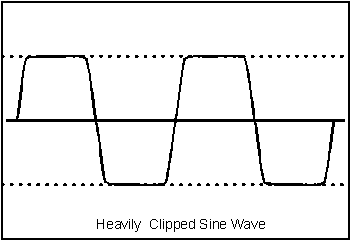
The problem is that a solid state amplifier will not compress a signal once the signal goes beyond what the design is created to handle.  Tube amplifiers will round off, compress, and fatten a tone with lots of harmonics, and send this signal to a speaker and it creates this magical "guitar" tone that we know today.  In a solid state amp, this signal is hard clipped.  It turns a mountain into a mesa, with a fat top.  You send this flat top signal to a speaker, and it makes the speaker want to destroy itself.  Well, not really, but a speaker is designed to move in and out, not to move out and stay out during the "flat" part.  This causes a speaker to malfunction.

Now why in the world would anyone want to use solid state?  Well, they cost less.  Their parts are manufactured for a myriad of electronic gadgets, so you can get the pieces and throw them together.  They also are more reliable, as there is less heat, and more stable parts used, in general.  There is another section of people that like them, and that is people wanting 100% clean tone.

The non-compressive nature of Solid State means that there are not a lot of overtones introduced to the signal, you have a pure clean tone.  Sure this kind of sucks if you want a creamy, rich, bell tone from your clean channel, but if you're applying a lot of amp modeling, effects pedals, or computer modulations, then a solid state signal is the "blankest" of canvases.


Then there are the bassists.  Bass takes A LOT more power to get the sound out into the audience than guitar does.  Some bass amps with tubes get up to the 300 watt range, but that's pushing it.  These monsters weigh over 100lbs without a speaker cab.  While on the solid state front you can get into the 1,000's of watts for under 1,000 dollars and under 20 lbs.  Now, 300 tube watts, when they are overdriven, can get insanely loud, but you're losing some of your "clean".  Solid state provides the largest, cleanest, most defined headroom for bassists.  There are other things to take into consideration, wattage is not a guarantee of volume, and the type of power supply will influence the sound as well, but in general bassists are much more accepting of solid state than guitarists.  Because of that, bassists now have literal pocket sized amps with 500 watts, and 4x10 speaker cabs that weight under 40 lbs.

Day 23

I warmed up with my Guitarcade as usual.  I also played some of the game based on Bending.  While still kind of inaccurate, the game did prove to be fun.  I think for a beginning guitar player, they should have stuck to the thicker strings further down the neck, because nothing will give beginners blisters faster than bending on the B at the 12th fret.

Anyway, I did the harmonics lesson.  Harmonics on guitar seem dreamily easily.  I wish they were this easy to do on bass guitar.  In bass guitar, harmonic play is like a top tier thing, up there with piano-esque tap play.  Jaco made himself legendary by making it a hallmark of his playing.  On guitar they almost seem effortless.  I know the lesson said that not every spot on the neck will make a harmonic, but it seems that just about any spot did.  This is not true of bass either lol.  Anyway, I got through the lesson pretty easily, but that might be because of my prior bass practice in the subject.

I did a lot of "amp" practice today, meaning I did it w/o Rocksmith.  It is just easier for me to practice scales and the songs I know with my amp.  I have a 25 foot guitar cord, and the amp is in a more convenient spot.  So I start a movie on netflix, put the amp on clean, and practice scale runs while I watch the movie.

I am really feeling the need to learn more blues-rock and rock style playing.  I keep doing the bluesy stuff I have practiced with for years, and I'm wanting to learn something new that I can improv in.