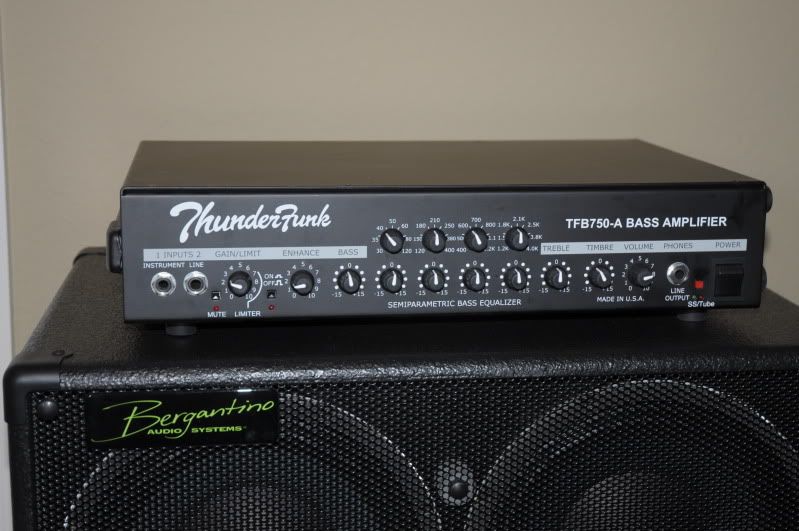
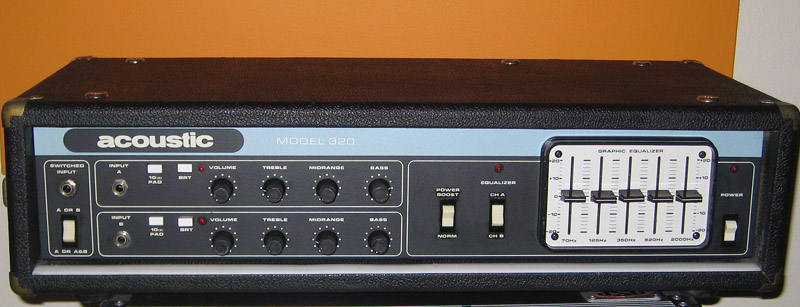
Showing posts with label Thunderfunk. Show all posts

Thursday, April 24, 2014

TrainWreck and Thunderfunk

Trainwreck is an amp you have either never heard of or know them notoriously.  Trainwreck has become the only challenger in recent memory to the highly sought after "Dumble" amps in the 30-50,000 dollar amp range.  So what are Trainwreck amps and why are they so rare?

Trainwreck was a series of amps put together by Ken Fischer, an amp tech out of New Jersey.  From the very beginning Ken had a lot of health problems, culminating in a life cut short in 2006 and a production line cut short at only a little over 100 amps.  Ken's designs are exercises in simplicity.  When you look at modern Marshalls or newer Dumbles, you will see vast arrays of electronics, wired with many filters, creating these crazy complex marvels of modern technology.  Ken's designs were the opposite of that.  When you look at a Trainwreck on paper, you may go "that's it?".  Just like baking, sometimes its the care and thought that goes in to a work, instead of the amount of ingredients.  Ken's designs were unique, new, and while some say influenced by Vox, were his own.  The "purity" of the signal path leads to touch dynamics and a "quickness" to the amps that other designs lack.  I am generally a "new tech or you're a cave man" type of person, but there is this word called "elegance" and if you can put elegance in your simplistic designs, there's art there that I appreciate.

How does this get to Dave Funk's spin on the A.M.P. 420, the Thunderfunk?  Well Dave was an amp tech, one of only two amp repair workers approved by Ken to work on the Trainwrecks.  In fact, when Ken was at his worst physically, he asked Dave to make two amps that were sold as Trainwreck amps, which are well documented, and verified due to the low numbers of Trainwrecks in existence.  Ken named each of his amps a girl's name instead of using a serial number, and so it is easy to track and keep records.


When I hear people compliment a Trainwreck on youtube or in a print review, I hear so many familiar things.  I hear about how fast the signal goes from playing on the guitar to hearing through the amp, and how it changes how you can play.  I have had the same thing happen with my Thunderfunk.  After playing it for months I got out the old Trace Elliot while I was demoing some compression pedals a friend let me barrow.  There was lag in the signal, the Trace Elliot, a tone machine of the rock gods, was "slow", and I never expected this to happen.  So when I read about the Trainwrecks, the lightbulb in my head went off.  Quite recently I was reading the forum on Freedom Stompboxes, and someone in another country wanted to make a Thunderfunk clone since they could not import one.  Several people said "wow, that looks really simple, should be no problem if you know what you're doing".  Again, the same thing said about Ken's Trainwrecks.

I find Dave's work really awesome, and the whole story behind all his pedigrees to be interesting to read.  The whole Aoucstic 360 story, the entire drama filled life of the Amp BH420 legacy, to the birth of the Thunderfunk as a sort of very complex yet very simplified amp making it among the top bass amps in existence.

Thanks to Dave's own website, http://www.thunderfunk.com/, the Trainwreck Wikipedia page http://en.wikipedia.org/wiki/Trainwreck_Circuits, and Talkbass.com for all the info.

Tuesday, February 11, 2014

A Funky Family Tree and day 47

Oh hey, that amp is in Rocksmith.


Oh neat.  That looks kinda similar.
Wait, that one looks like way similar.

Ok.  I see a pattern here.


Hey! That one looks differen.... oh wait.  No it doesn't, they just use sliders on the top.

So what is going on here?  Well, what we have here is the legacy of a man named Russ Allee.  Mr. Allee helped create one of the first "serious" solid state amps that were meant to replace tube amps with bass.  You see, a very long time ago an obscure bass player by the name of Paul McCartney plugged directly into a recording console and made this beautifully clear bass tone.  His band, called The Beatles, became huge and people loved this tone, and so extremely tight and clean tone became acceptable for bass.

The Acoustic series of amps came along and were adopted by a couple of famous bassists, namely Jaco Pastorious, that wanted that clean "direct into the console" sound in a live setting.  Russ Allee designed the pre-amp section that you see comes down to us through time in other amp designs.  They are all connected to him.  Russ worked with Steve Rabe to create the AMP420.  Steve Rabe later started the company SWR and designed the SWR SM-400.   He added to and changed the design by incorporating tubes.  Steve wanted to do some new cabinets, ones that would take advantage of the new super precise solid state amps, so he hired David Nordschow to help him design them.  Nordschow later went on to create Eden amps(the first amp listed up there).  The Eden World Tour camps were their second set of designs, which he had consultation with... Mr. Russ Allee.  Eden took the original designs of Allee, but added the newer parts that SWR had, namely tubes in the pre-amp.

Well what about the Gibson and the Thunderfunk?  Well AMP was bought by Gibson, and with its design Gibson made the GB440 that is pictured up there.  This, however, was not a long lived line, they boxed up all the old backstock and parts and put them in a ware house where a man named David Funk bought the building and the rights to everything in the building.  He would be surprised to find all these parts to amps, and being an amp expert himself, decided to put them together and sell them.  He changed and improved the components and created the Thunderfunk.

Thanks to Ivan Mike and various other Talkbass alumni for schooling me in the pedigree of my favorite amp.

Day 47

It is a funny thing.  Somehow if I'm playing metal, I can be responsible with the volume.  I know I miss the "feel" of the deep bass during a palm mute, but I know I'm still doing them.  Blues, well that's pretty simple to do quietly, lowering the volume on my amp actually helps me get a less driven sound.  Crunch tones are no so dependent on volume, the whole point of the solid state pre-amp section of my Marshall was to make sure you can get lots of crunch at bedroom levels.  I should not have to care about volume for Crunch. I tune in the ACDC crunch though, and I can't help but crank the volume up.  I guess its the 10 year old that always wanted to play Highway to Hell in me or something.

We're getting to the home stretch now aren't we?  That day 60 is creeping up.  I can also see reader fatigue, I can tell how many views and all that.  It has lasted longer than I thought.  I am lucky in that I knew from the start that this blog was done for me.  So even if my views go to zero, I still will continue this because it keeps me responsible, it keeps me playing, and it keeps me writing.  Still, I hope someone out there reads my little history of the tech blogs and my guitar profiles and maybe finds something interesting in all of this for themselves.

I have so many plans for after Day 60 that I feel like I am losing out on the "now".  I do have a sort of creeping thought that maybe I'm not utilizing Rocksmith as much as should, but I have to remind myself that it is a tool, and it is not like I'm stagnant.  I'm still using Rocksmith every day.  Jam sessions are a must for me to keep interest.  I play around with the tone designer, trying to match tones to songs that aren't in the game.  Guitarcade, come on, that stuff is fun even if you're not learning guitar.  I guess I'm just hoping for that next "breakthrough" to happen.  I understand that those "breakthroughs" come slower and farther in between as time goes by, but I guess I'm just an optimist... which isn't really a descriptor of me usually, but yea.

Sunday, February 2, 2014

The Wall... and Day 38


The legendary Wall of Marshalls.

You know, there was a time where lots of speaker cabs were a necessary thing.  The old amps in the old days were not 100 watt, the speakers were not very efficient, and bassists especially needed more.  The Who famously got in battles over who could have more on the stage, as Entwhistle tried very hard to be heard over Towsend.  It takes many many more watts and speakers to be heard at the equal level on bass than on guitar.

The truth is, and its been the truth for a long time, any gig that needs this many speakers usually has a house sound system.  At Woodstock, Hendrix didn't need a ton of amps on stage.  Modern venues typically have a house PA system, and bringing a loud ass amp is usually frowned upon by the establishment.  I know that if you have not experienced what a 100 watt amp and a 2x12, much less a 4x12 can do, then you probably do not understand that it is insane to bring more to a gathering of a couple hundred, maybe even a thousand or two people in the crowd.

This is a famous picture making the rounds on the net, and it really does hit this point home.  There are so many bands that use these configurations.  Two sets of 4x12's and a 100 watt tube between them and you're good for like a mile radius to need earplugs.  I watch a lot of "when I first new I made it big" interviews, and more than one story is buying their first 100 watt marshall and setting off parking lots full of car alarms by cranking it and seeing how far it will go.  I don't own a tube amp, but I have a 550 watt bass amp with super efficient designs(makes an ampeg SVT4's 900 watts sound like a toy), and I've yet to be brave enough to go past 1/4 turn on the volume.  I even sat it up outside the garage once and my windows were still rattling, and the amp was set up blasting away from the house.  This is nothing compared to tube wattage.  Marshall and Trace Elliott have both made 300 to 400 watt tube amps for bass, probably the equal of a 2-3,000 watts of solid state.  Some of these Metal guitarists are diming 200 watt guitar tube amps on stage.  Wall of Marshalls or not, that's some loud shiz.

What I'm basically saying is, use ear protection

Day 38

Looking at funk, there's a couple of things I'm going to find difficult.  The first is going to be getting used to keeping the timing.  I'm actually really good at keeping timing when it comes to rock, and if I have a backing track I'm good at it with blues as well.  I've never had to do the foot counting while playing thing.  In fact, much of my playing settles around keeping complex patterns in my timings and "bring it all back" together while I improv.  Funk though is using much more hard structure than I'm used to, especially when the basics is wrapped in 16th notes.

I know from funk base that you play on the one "and have fun".  What that means is you always play on the first beat, its funk 101.  Bootsy taught me this, and also Larry Grahm, both videos from youtube that I used to watch a lot for playing bass.  Bass funk is less restricted than guitar funk, at least from what I'm seeing in the lessons.

I am going to have to break out the metronome built into Rocksmith for practicing the strumming.  That "funk" guitar sound in most people's head(when they're not actually thinking about the bass, which is 90% of what people think of from my experience talking about funk songs) is a 16th note, 90ish bpm high twang strum.  I'm finding most of it is in E.  I've also found that there is a Hendrix chord that they used a lot, E7#9 and I see myself playing around with that chord outside of funk as well.

Anyways, I'm only here for the basics.  I'm not devoting my time to getting deep in the funk as of yet.  I just want to be able to do the strum pattern with a chord or two, so I can do basic funk rhythm when I'm asked to.  I can do a blues improv around this strumming and get by sounding funky.  I'm broadening my horizons, not switching my specialties.

Sunday, December 29, 2013

Bass cheat and Day 03

I have mentioned that I am much more of a bass player than a guitar player.  I can play several genres of music in bass, and a bass in my hand feels natural.  In Rocksmith 2014, there are 3 career paths you can choose from: Rhythm, Lead and Bass.  At any time you can switch between them easily on the main menu.  I did find a flaw with this... your missions are not career specific.  This kind of sucks because Missions are sort of your road map of how to learn.  Also, this means I can essentially cheat.  If there's a mission that is hard for me to get correct with Lead guitar, I can switch over to bass and fly through it(at least now at the beginning).  I will have to keep myself in check, and also I will need to make more accounts so I can learn the others separately later...

So the bass is pretty awesome.  I recognize the amps that they have modeled for bass.  They do not have my particular amp(Thunderfunk), but they do have Eden, SWR, and a few others that are descended from the amp mine is descended from.  I was able to dial in a close enough tone to what I generally play with, and was able to jam pretty successfully with an in game band.  Really fun, and only a few issues.  The audio lag is more noticeable for me on bass, but that's because my amp is one of the quickest response amps ever made, so I feel the lag much more on bass(I really need to get my cable situation set up to reduce this lag).  Also the tracking of my note playing is behind, and this could be a software issue, because I don't think I play all that super fast on bass.

Still, bass was fun, and they do have some fun bass songs available for DLC.  If you want to do more than chug your E string to the rock offerings of the original set, then download the Soul Classics pack.

Day 03

I decided to warm up with jamming in the Session menu, and ended up going through a lot of the missions.  They showed me what I had already discovered, that the scale shape can stay the same moving up and down the neck, and you just change the key you play in.  Next they had me choose several types of bands to play with.  I really liked the Electronic Campfire whatever band, I can't remember the name, but campfire will get you there.  Its sort of a folksy/electronic band with a clean sound from the guitar, I had a lot of fun with it.  I sounded like crap with the Grunge band.

They keep giving me missions to play for 10 minutes with various bands, and at first you might think "omg, I just came in here to warm up" but then you remember, you're memorizing the scale shape, and also learning how the notes in each key sound and what works.  They had me play with the tempo, and change keys while jamming.  Once it started having me play with the Vintage Rock band, I started having a blast.  I liked what I came up with in the sessions so much, that I played well over the 10 minutes, and even grabbed my phone.

Yes, I recorded myself.  No, I'm not prepared to have them on the blog yet... unless for some reason I get the request from those on my G+ and Facebook account.  Anyway.