Showing posts with label Fuzz. Show all posts

Sunday, February 9, 2014

Fuzzy Memories and Day 45


In the fuzz world there's a big debate between fuzzes.  Originally the most popular was the Fuzz Face, a huge, weird, round pedal with one thing going for it; Jimi Hendrix used them.  Thing is, by the time they became a "known" and that there was a large enough market for them, the Fuzz Face "formula" was changed to using a different chip.
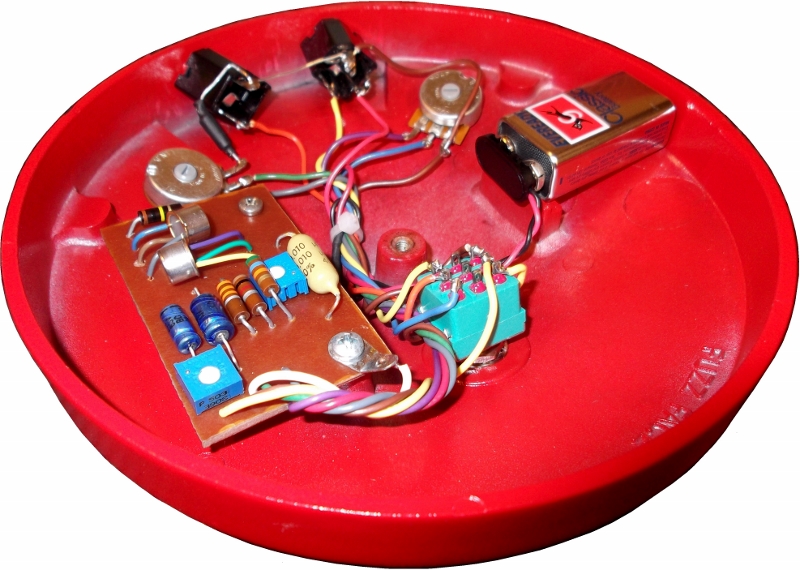
You see, the original used a Germanium chip in them.  They were switched to silicon.  It is said that silicon chips were more sterile and less "warm", and so for many people this seems like a crazy decision.  You know who did not think it was a crazy decision?  Jimi's pedal man, Roger Mayer.  Roger has said in many interviews that Jimi would buy dozens of Fuzz Faces, spend a day figuring out which ones were "good" and selling or dumping the rest.


You see, when chips are made, they are made in wafers and cooked in a furnace.  The chips closer to the middle are cooked differently than those closer to the walls.  Germanium chips vary wildly in this aspect, and to get a consistent product, you have to spend many man hours getting them correct.  The market was not large enough in the 60's to warrant that.  Silicon chips are much more consistent, the placement of them in the oven does not affect them nearly as much as Germanium.  So this is the reason for the switch.
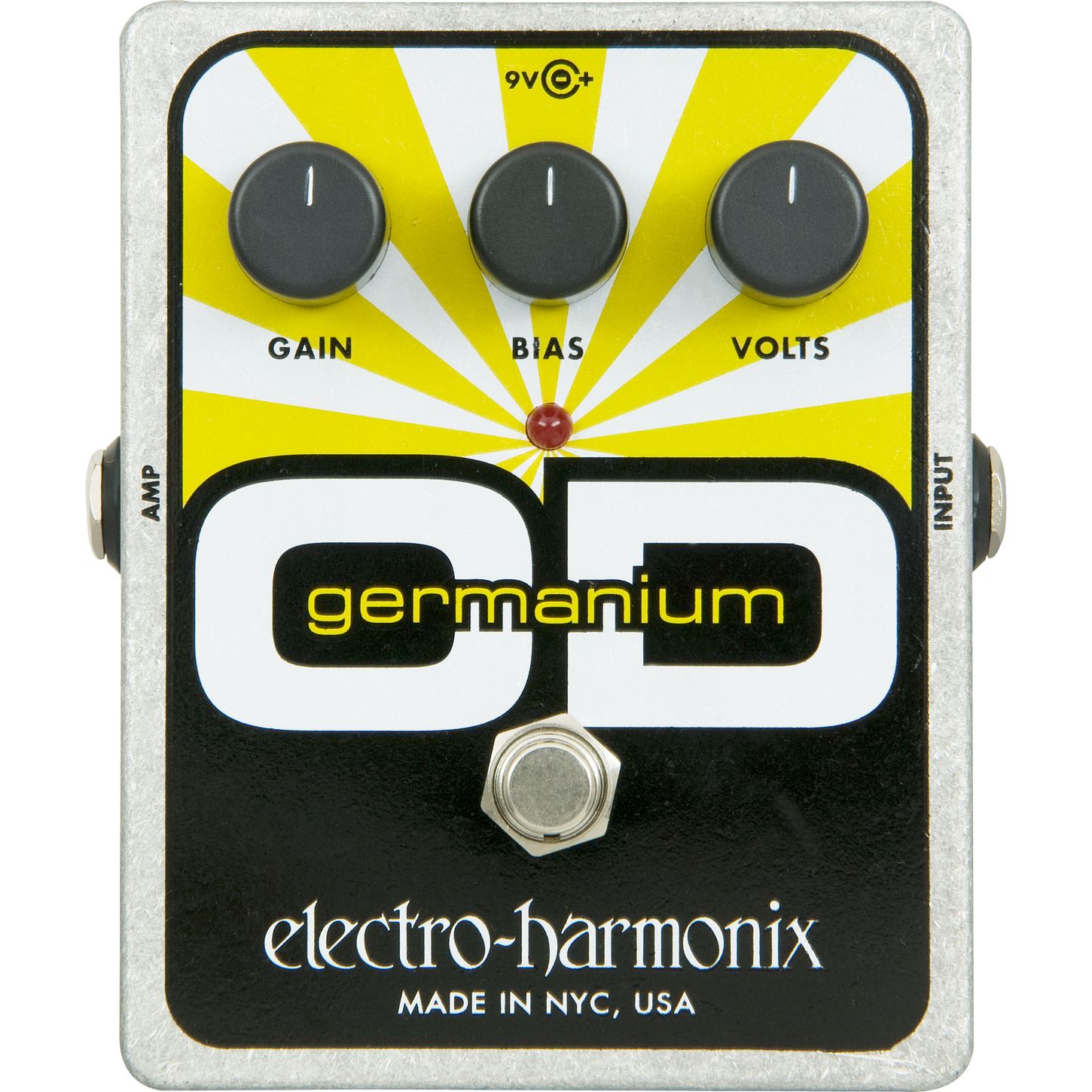
Remember this if you ever get into collecting or even buying pedals that use Germanium.  You can not really base your experience on anyone else's pedal, you really should demo the pedal yourself before getting one, especially if you're going to be paying 100's on an original Fuzz Face.  Big brands like Electro Harmonix claim to put in the time to find the "good" chips, but that does not mean there is going to be no variation.


Day 45 

Ugh, I've got a seriously bad sore throat.  It would not be so bad for practicing, but coughing so much makes my brain slosh around and gives me a headache.  So I basically just practiced quiet chords and unplugged blues and rock stuff.

I did plug in to Rocksmith today though, I'm pretty sure that's a condition of the challenge lol.  I had it turned down while doing my practice tracks(chords 101, 301, the Hammer on practice track) and played Guitarcade(string skip, chordead, Scale Racer).  You know, you get used to playing so loud you can't really hear your own strings all that much... but nothing makes you sound like a "newb" to your own ear than doing all this stuff with the twang of an unplugged in guitar lol.

That's one of the things I figured they should have done better with in the 60 day success story adverts on Youtube.  They should have recorded the sound directly and not so much with a mic near the player.  I think the players were even better than they sounded because the string sound was twanging around in the background while they played, and that just messes with people's hearing and expectations.


Tuesday, February 4, 2014

Pick your Pick and Day 40

I'll get this out of the way first; the only advice you can really give about picks is to try them out and figure out which you like best.  Picks are like 25 cents, and you're going to wear a pick down and have to replace it eventually, so why not just get a few and test them out.

Other advice:

Thick, hard picks give you a very strong attack on the string.  They are less flexible but make a harder hit on the strings.  Many people that play more "lead" guitar, note for note playing as opposed to chords, prefer to use a stiff pick.  These picks will also tend to wear out faster if you use it for a lot of strumming.

Thinner picks are more flexible.  They are easier to move from string to string in a sweeping motion, so these are very adaptable to chord playing.  They are made to be flexible, so they wear out slower when it comes to strumming.  When it comes to note per note playing, they can actually slow you down a bit.  However more the pick has to be flexed to get past a string, the more effort it takes to strike the chord.  We're talking milliseconds here, but "feel" is subjective.

I personally like a .88 pick.  It would be considered a little bit more stiff than the "medium" side of the spectrum.  The lightest I can stand is a Fender Medium, I do not even like them very much for strumming.  I have a 1.14 pick that is too stiff for me.  They make some that are 3x as thick as that, they are so thick that they generally have a ground out "grip" on them so you don't feel like you're holding a brick.

I've seen videos of people using STONE or GLASS picks.  These have zero flex to them.  I would consider this extreme, but Brian May from Queen uses a coin that is just a tad bit bigger than a US dime.  Billy Gibbons from ZZ top uses a Mexican peso.  Some like Celluloid picks because of their flexibility and the traditional feel of them, but there is also tortex.  Tortex is a rougher plastic that provides a little more grip, this is my material of choice.  If you need even more grip there are specially treated picks with a rubberized surface to them.

Like I said at the start, you just need to try them out to figure out what you like.  Don't be afraid, they usually aren't expensive, and you'll lose many of them before they wear out anyway.  You don't have to be different, and you might want to worry about your strings before you go using a coin.  Work your way progressively towards the ends that you're comfortable with.  I plan on keeping some Fender cel mediums along with my tortex .88's.  Some times you just feel like a change.

Day 40

I've had too many silent(unpowered) nights of practicing chords.  Today I tried out my new amp set up.  I've got my amp elevated, so I've lost some of the low end in the sound.  I have cranked up the bass settings, but ended up just having to take the amp down to the floor when I was doing my metal practice.  I just have to "feel" those palm mutes.  If you keep your practice amp on a table, take that into consideration; you're losing low end.

I am fuzz-strated.  I can't get a fuzz in Rocksmith to sound like I want AND I can't get a fuzz sound from my multi-effects pedal into my real amp.  I guess that fuzz is just too hard to do digitally modeled?  I don't know.  I did put a high gain amp model into the dirty channel on my Marshall, and got an acceptable, but overly complicated Fuzz.  I want a Devi Ever Soda-meiser so very badly.

I finally recorded some of my heavy metal "phrases" I've come up with.  A few days ago I was going to play some for my girlfriend and my mind just went blank on the stuff.  Playing in front of someone messes with your memory I guess.  Anyway, I have recordings of a few of them now so I can just bring that up on my phone and job my memory.  For some reason I kept wanted to make it more "swinging" sounding in the beat.

Thursday, January 16, 2014

Overdrive, Distortion and Fuzz day 21


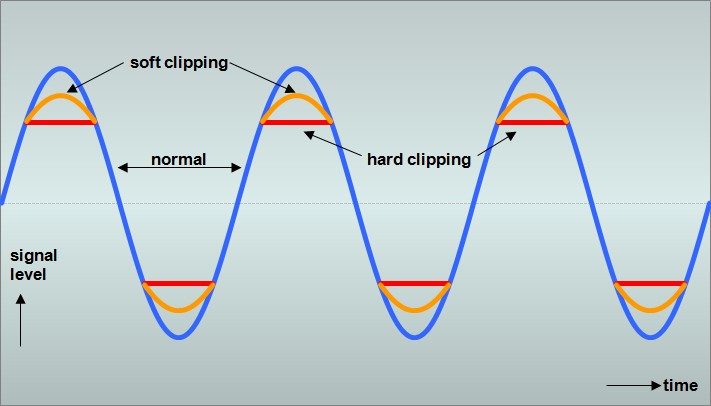
Imagine a guitar signal as waves drawn on paper.  Sharp mountain looking waves.  In Overdrive, these waves are rounded off.  They are squished, or compressed, and this creates fat, rounded hills rather than jagged waves.  They are fat sounding, and full of new harmonics and multiple frequencies in the same area.  You get your guitar's tone, but also just a bit of dirty signal.  You can either increase your guitar signal into the amp and overdrive the tubes in the pre-amp, or you can push the amp's volume to louder than it is meant to go and get a power amp overdrive tone.  This really decreased the lives of the early tubes(not to mention it made audiences deaf).  Later, players wanted to be able to do this all the time, so they created pedals that would boost the signal before it got into the amp.  This would guarantee overdrive, these were the first Overdrive/boost pedals.

After the pedals came to be used, players found that you could REALLY push that signal through and it would distort the sound into a crunchy, broken up sort of sound.  They created pedals or modded amps so they you could puts large amounts of gain through a tubed amplifier, and this created Distortion.  It is enough overdrive to lose some of the characteristics of the guitar your playing, but it created enough rich harmonic overtones that it still sounded musical.

One day someone went mad, and said "what if we just cascade the signal on top of itself in a pedal and caused it to get so broken that you can barely even hear the original guitar's sound" and low and behold, Fuzz was born.  Fuzz can get so strong that you practically can't hear the original guitar signal put into it, but it creates a nice, enveloping fuzzy pattern that still responded to the guitar player.

So as you can see, Overdrive, Distortion, and Fuzz are all related, and are almost steps in a sequence.  Its a bit of light, medium and heavy "dirt".  In a later post, I will explain why distortion is such a problem for bassists.  Hint: it has to do with that flat line in the picture at the start.  That flat line sucks.


Day 21

I went back into the lessons today and did the Double Stop lesson.  This is yet another guitar thing that I had heard of that I had never really learned what it was.  Turns out, I knew what it was, and I did a whole hell of a lot of it with playing bass lines.  Its just that I knew it as droning.  I am kind of let down by what it is, because it sounds more interesting than it is.  It is just two notes played at the same time and typically is not part of a chord.  Now, I'm not sure if doing a octave thing with it counts as being a double stop, but I do that a lot too, its one of the reasons I took to playing Everlong pretty easily.

Which is kind of funny.  I already knew how to do power chords because of the Green Day songs I had learned years ago.  I already knew how to do the octave parts because, well, I like to do octaves on bass, I've been doing that for years.  So the only real part that was holding me back on Everlong were the thought that it would be too difficult, and the Drop D tuning, which I never did before.

Today I also started playing with the Pentatonic major.  I have to say after playing tons of the minor scale lately, I really like the sound of the major.  For some reason it makes me want to make slower, soft rock music.  I had to record a little piece I came up with while just practicing it.  I've not memorized completely the pattern yet, but I'll be working on doing that for a while.  Repetition, it can get boring, but its the only way to learn.