Showing posts with label Electronic. Show all posts

Friday, February 21, 2014

Gaining volume and day 57

Gain and Master Volume


To a bassist using solid state, the relationship between these two are very confusing.  To a guitarist, it is a little more obvious.  If you ask both what gain is, they'll usually give you a blank stair, and the guitarist will talk about getting a dirty signal.

If you look at a guitar as a signal transmitter, you can perhaps understand gain a bit more.  The signal from your guitar is relatively low, that is why passive instruments with no batteries are still the most prevalent.  The current created by the magnets and the strings is enough of a signal.  When it gets to your amp, it will encounter 2 stages in most amp designs.  The first stage is the "pre-amp".  This is the stage where this tiny, small signal gets boosted.  This is where your tone is "shaped", if you are to make changes to a signal, its much easier to fine tune the signal if it is larger. That is what the Gain does, its a knob that increases how big you transform your signal.  If you make the signal very large, you get pre-amp distortion.

(Pictured: to the left are the small pre-amp tubes, to the right are the large power amp tubes)

After the first Gain stage, the pre-amp, the signal goes to the power amp stage.  Again, this stage takes whatever signal you give it and makes it much larger so that it can power the speakers enough to make a mechanical transition of the signal.  If you have boosted the signal to great levels in the pre-amp using gain, then it will distort this power section as well.  It also means you get a HUGE increase in volume.  Power amp distortion causes the tubes to get very hot, and will wear out your amplifier components.  Power amp tubes will glow with the fire of a thousand suns when overdriven hard.

(pictured: power tubes, some people aren't used to seeing things lit up like this in electronics unless its LED's)

That is why the Master Volume knob was invented.  It sits between the Pre-amp and power amp stages(technically it is pre-amp).  With it, you can bring down the signal strength before it gets to the power amp section, but it will let the pre-amp distortion through.  Pre-amp distortion is popular because it is much lower heat and voltage, and is also cheaper to do all around.  You can get that distorted sound while keeping the power tubes working at normal temperatures, and keep your ears from getting split from volume.

Solid state bassists, of which there are more than tube users these days, don't have this kind of distortion usually.  So how do they know how much gain to use?  Well... they get a helping hand.


Day 57

I have pretty much explored my guitar amp and can now manipulate it to do what I want fairly quickly.  Not too bad for having it for a decade right?  Yea lol.  I made it a point to know how amp EQ works with bass. A lot of people I've known that played kind of have these super complex and powerful EQ's and have no idea what they're for.  They max them or set it all at 12 o'clock and call it a day.  Then they talk about needing this or that pedal for this sound.  I wanted to get away from that.  It is a habit of mine to see that kind of stuff and want to not be that way.  When I got the Thunderfunk, I was like "I really REALLY need to educate myself if I'm going to have this kind of amp". I remember my bass bud coming over a good number of years back and him not being happy with not getting a Claypool sound.

"its gotta be his fingers or his carl thompson"

I informed him that Claypool likes to play full mids blasted.  A "frowny" if you look at it on a graphic EQ.  I EQ'd it in, and sure enough, there it was.  He then played Tommy the Cat and made me realize how much I suck at bass.  Anyway, recognizing EQ'ing and sounds has always been important to me.

So far I switch between as light a distortion as this amp can get(which is not very light lol) and a high gain metal sound, which it is surprisingly good at doing.  Sometimes it gets pretty fuzzy too.  I have some stuff to learn about the frequencies and how they interact with the band.  Like, I don't know the mid frequencies in Guitar, so I don't know if boosting them will interfere with the bass player's sounds.  The whole reason you do not want to scoop a bass live is that you kill "your" frequency.  You boost where you overlap with the drums, and you muddy up the guitarist by interfering with his highs, while your relatively instrument free play area of the "mids" is cut all to hell.  That's a "scoop", and its only great in your bedroom.  I need to research the guitarist's play area.  It sure seems a lot of people scoop a guitar and it seems more accepted.


Friday, February 14, 2014

Echoes and Day 50

The sound of Reverb is the attempt to mimic the echo of the music reflecting back to the audience in certain acoustic spaces.  Generally, like in real life, a reverb echo is many many copies of the original signal fed back into the signal chain at very quick intervals, but lowering in amplitude(volume) each time until it quickly is no longer audible.  The real neat part of reverb is the ways it has been achieved.

The first way that Reverb is made on purpose for recordings have been in "echo chambers".  These are purpose built rooms with nothing more than a speaker and a microphone.  The signal is played and real echos, real reverb, is recorded in the chamber.  The only "fake" part about it is that the whole band is not playing inside.  This technically means that the room can be arranged to produce "unnatural" echo effects that would not happen in a performance.

Then came the plate and spring reverbs.  They used a transducer to turn the signal into physical movement that would manipulate a piece of metal into creating reverb effects.  At the other end of the metal would be a microphone to pick up the sounds.  Plate reverbs can be huge, hundreds of pounds, but can be tweaked with many settings.  Their size prohibits them from being portable, so are generally used as studio recording devices.  Spring reverbs are not as precise, but can be made small enough to fit into amp models you can carry around.  Fender are best known for including reverb in their amplifier combos in the 60's and 70's.

The plate and spring echo is the "classic" reverb sounds that are well accepted today.  The flaw is that they create a false echo, not a real representation of the signal.  Digital Reverb is the most common found now, as it is relatively easy to copy a signal and feed it back to create the echo.  Unlike Plate or Spring which mimic a generic echo, digital can actually create the many signals found in real echo.  Over time digital reverb now mimics the Plate and Spring reverb, and can even do their styles while actually using true copies of the signal, in many ways some find it superior.  A good digital reverb can do all the types and blend them, and even do some strange ones.

Day 50

Ok, this is the home stretch.  I'm going to think positive and work on learning a song from the game that I don't already know.  Here we go: Aerosmith Walk this Way.

Ok.  Screw that.  If it was Ragdoll I could probably listen to it over and over while I learn... not so much with Walk This Way.

Knockin' on Heaven's Door.  Ok, now this song I think I like enough to listen end on end while "learning" it in the game.  I'm going to do it at least for 45 minutes every day till the end of the 60 day challenge.  I'm not going to be pessimistic and I'm not going to say that how the game teaches songs is bad, I'm going to trust it and do its recommendations and I"m going to learn this song without going on Youtube.  I want this game to teach me a song.  A single song in the 60 day challenge.

Given, I did use Rocksmith to learn You Really Got Me, Everlong and Blitzkrieg Bop, I used a lot of youtube help with Everlong and I don't really play the version the game puts forth.  The "lead" version, because again, it only sounds good if I'm playing it with a backup band.  I opted to go for a more solo friendly version.  You want me to sit there and plink out the lead verion, I can, but you'll soon go "oh I see what you mean".

Thursday, February 13, 2014

Metal not lmletal and day 49


The problem of volume has always been with the guitar.  Earlier strings instruments used bows and could have giant bodies to provide immense volumes.  Eventually the body would get so large that you got out of the guitar's sound pocket and you'd be playing Bass.  Any form of making a guitar larger ended up being more like larger string instruments like the Harp or the piano.  This was all solved by electrical amplification in the 20th century, but right before that revolution an amazingly cool guitar style was invented.

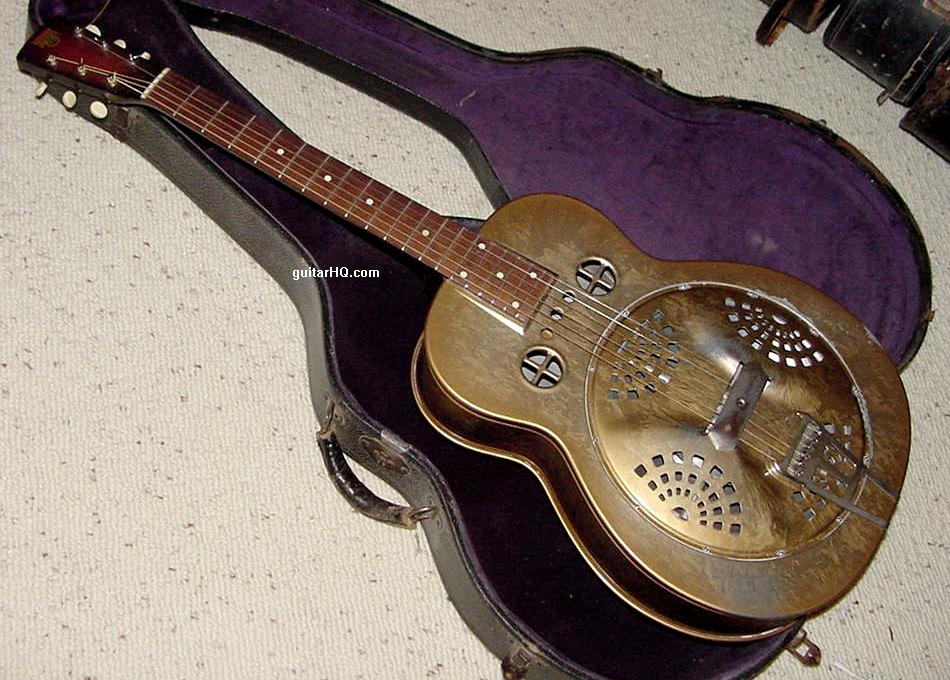
Resonators are guitars designed to work with metal parts to create a strong reflection of sound back to the audience.  The sound was certainly louder than many acoustics of the time, but the metal really did give it a unique sound that did not work with most types of music at the time.  Resonators became cheap, and easier to move around than having your own electrical PA system.  The more "rural" types of music adopted these "outdated" instruments, and due to the sheer amount of usage they got in Bluegrass and blues, they are now accepted as mainstay sounds of those genre.

Resonators have metal bowls and reflectors, known as "Cones" built under the strings to take the sound and reflect it back out into the audience.  The originals used a 3 cone design, but a split in the company lead to a simpler and cheaper "dobro" design using a single cone.  Further, you could get square necked resonators to play like a steel lap guitar, or the round neck variety to play more like a traditional guitar.  Both are popular with slide guitar techniques.

Resonators, to me, rank as some of the most beautiful instruments ever created.  There are entire guitars manufactured out of bell brass and engraved with patterns and designs that remind me of the dualing pistols of the 17th century.  There are just as beautiful wood and metal combos that look like something out of a junk yard, but sound amazing.


Day 49

Still snowed in, but my hearth is still warmed by the awesomely burning light of ROCK.

or something Jack Black would say.... or maybe I'm watching too much Gearmanndude.  Wait, same person aren't they?  Has that myth been busted?  I refuse to accept it.

Anyway.  Somehow in between all the metal and rock, I came up with a very poppy guitar track.  Sounds a bit like "Steady as She Goes" now that I sit here and think about it, but I think that I was channeling Nirvana's Nevermind when I was doing it.  It is poppy, and its sorta happy sounding, but don't hold that against it, its fun to play!  I swear.  I'm really jonesing for a fuzz pedal these days.  Its quickly looking like 70's rock may give way to some 90's alternative soon.

So I'm practicing Stranglehold and while looking at my "recommended" tab, there was Black Betty.  Wow, it looks "doable" for me as well.  Black Betty just has so much energy, I figured I wasn't ready for it, but I think with practice I can get it pretty quickly.  It all goes back to my power chords having a lot more definition and sound to them.  As I said before, they're becoming less punk and more 70's rock, and that's evident with the two new songs I'm practicing on.  Black Betty has also been in my head because of Rayman Legends.  There's a level on that where the bad guys play Black Betty while you bowl through them running from some monstrosity or another, and its highly entertaining.


Wednesday, February 12, 2014

Legendary: The Fool and Day 48


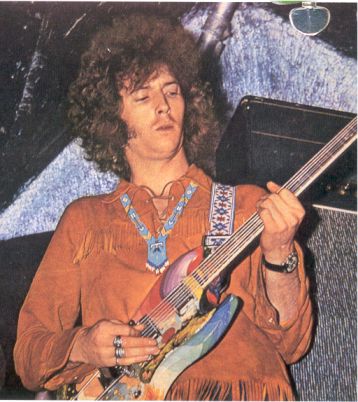
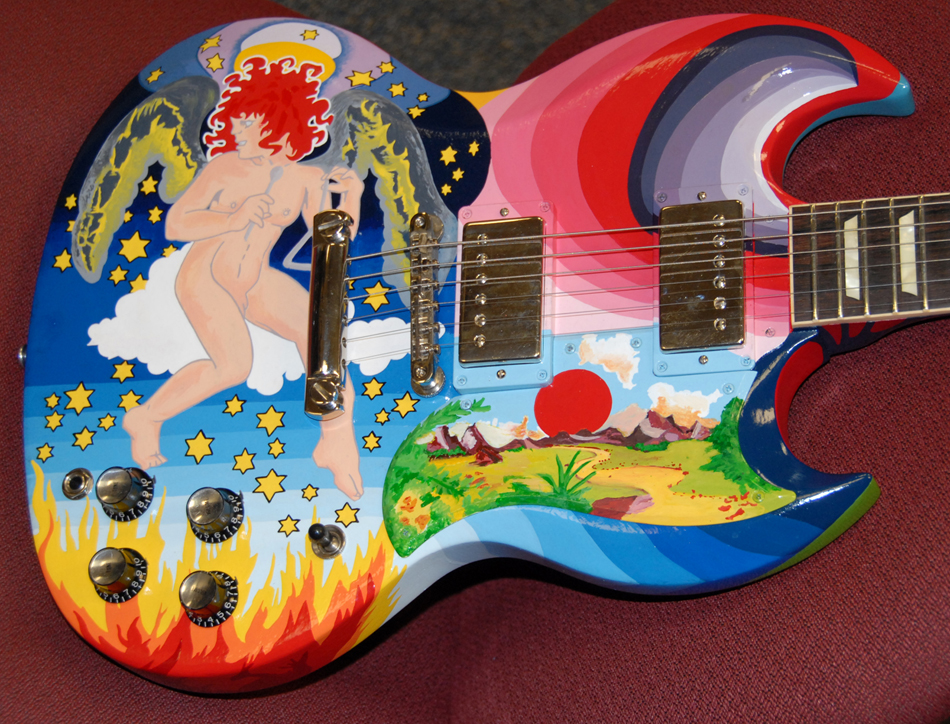
That's a Cream era Eric Clapton playing a Gibson SG known as "The Fool".  You might not be able to figure out what is more shocking, the crazy paint job on that guitar, or Eric Clapton's 60's Fro.  Either way, that picture does not really show off the guitar in an appreciable way.


The guitar itself is a 1964 standard.  If you read my earlier history on the SG, then you know this makes it a "Les Paul Standard" of that era.  Around this time there was a collective of Dutch artists known as "The Fool", and the psychedelic art movement had just come into full swing.  Being a friend of George Harrison, Clapton thought Cream should get on the bandwagon and do a theme based on their artwork for the upcoming USA tour they were planning.  "The Fool" did instruments for all band members, with Clapton getting this SG.  In fact, it was the love of this SG that caused Clapton to gift "Lucy"(a previous Legendary instrument profiled on this blog) to Harrison.
It was with The Fool that Clapton perfected his "Woman" sound that would dominate his music for decades.  Unlike some artists, Clapton often records with the same instrument he plays live, so many of the later Cream albums were recorded with this exact guitar.  After going through a few people's hands after Cream broke up in 1968, it landed in Todd Rundgren's hands for $500.  Todd had seen Clapton play the guitar live, and it was this guitar that inspired Todd to go into the music industry.  He kept the guitar for decades after, naming it Sunny because it was used to record Sunshine in Your Love.  Todd is most known as a record producer, with credits like Bat Out of Hell by Meat Loaf.  It later was sold for $150,000 but quickly sold a few years after that for $500,000.  It now resides in a private collection, but by someone that at least loves to bring it out for magazines and interviews. 


Day 48

We come from the land of the ice and snow,
From the midnight sun where the hot springs flow.
The hammer of the gods will drive our ships to new lands,
To fight the horde, singing and crying: Valhalla, I am coming!


We're snowed in here, and so the vikings marched while the snow fell.  Yep, more metal practice.  I'm starting to work my new rock phrases into the palm mute stuff.  I also plugged in the bass and tried my hands at making a matching track of that for what I'm playing.  

Also I found out something: Ted Nugent is a dirty dirty old man.  It turns out that his 70's stuff is very close to the way I play.  I mean, almost exactly.  He stays pentatonic, his hammer on flourish is EXACTLY like mine.  Stranglehold is one of the most awesome riffs in rock history and it is almost exactly the kind of playing I do when I'm practicing.  So if Ted Nugent promises to do certain sexual favors for you if you can play Stranglehold, he's not saying that its hard, he's daring you to take him up on the offer.

Dirty dirty Mot&(*Fu^k#@r


Monday, February 10, 2014

Spotlight Guitarcade: Gone Wailin' and day 46

Gone Wailin'


The first and most simple game in the Guitarcade is Gone Wailin'.  The game's premise is simple: the background is going to scroll, a wail is going to shoot you into the air as you make noise on the guitar.  Use this to collect bananas, avoid birds and islands.  The level is randomized and gets faster as you go.

Let it be known that I tried for all of 5 minutes(almost no time when it comes to me) to find what this game is based on.  I figured it was based on an old game like all the other games, but now I am convinced that this is just a take on the tablet/phone game Jetpack Joyride.  In Jetpack Joyride you touch the screen to fly up, and let go of it to fly down(the satanic Flappy Bird was not in existence when this game was made).


When I first played Gone Wailin' I thought it was fun but I also thought that there was no way this game would help me.  I thought to myself "I know how to make noise on my damn guitar".  I was stubborn in the early days and determined to take everything serious about Rocksmith 2014, and I am glad I did.  Eventually I realized that I had stopped banging on the strings trying to make as much noise as I could in a punk style, and ralized that its much easier to slowly strum and just maximize the amount of string vibrations.  That helped me when it came to chord work.  For beginners, this game is essential and I would not advise them to stop using it even past the 60 days.  Why?  Its a muscle builder.  My hands do not fatigue easily because of my prior bass playing experiences, but I remember when they did.  This game will help build stamina.

Also it really is fun.

Day 46

I've got a huge, nerdy post about bass amps coming up, but I feel like I've had too much bass coverage recently, and seeing as this blog is based on me learning guitar it feels a little out of place.  Bass has been a big part of my life, so its only natural some of that bleeds in.

Sore throat still going on.

I am now officially recognizing that I am getting better at guitar.  It is 46 days in, and I know I am much much better than I was when I first began.  Rocksmith has definitely helped me, not only with learning the basics, but also with keeping my interest in playing every day.  Too many times I used to think "well I have a lot to do, I can put that off till tomorrow" and just like the Credence Clearwater song says, someday never comes.  The chords I know are making their way into practice.  My power chords are sounding much less punk and much more 70's rock these days.  My busy blues style is learning to fill space with more than just notes.  I am not a guitarist yet, and I would not say I'm good at guitar, but I have improved from Day 1, you would not even recognize what I was doing on Day 1 as anything but "screwing around with a guitar".

I need to update my technique book.  I'm not doing a lot of song learning, just as I planned, so I only have one notebook to update.  I still have not committed as scholarly as I should, but I know myself and I know I can not resist making an "essay" out of learning guitar lol.  One of the first things I am going to do after Day 60 is get a "song writing" book.  Some of you may laugh at learning song structure and maybe even think "isn't that something you should just... you know... do?" and to that I laugh.  If you spit in the face of people that learned song structure through reading, then you should probably never listen to Led Zeppelin again.  I do not have a support network of musicians to just "tell" me how to do all things.  What's with this attitude of glorifying ignorance and putting down learning these days?


Sunday, February 9, 2014

Fuzzy Memories and Day 45


In the fuzz world there's a big debate between fuzzes.  Originally the most popular was the Fuzz Face, a huge, weird, round pedal with one thing going for it; Jimi Hendrix used them.  Thing is, by the time they became a "known" and that there was a large enough market for them, the Fuzz Face "formula" was changed to using a different chip.

You see, the original used a Germanium chip in them.  They were switched to silicon.  It is said that silicon chips were more sterile and less "warm", and so for many people this seems like a crazy decision.  You know who did not think it was a crazy decision?  Jimi's pedal man, Roger Mayer.  Roger has said in many interviews that Jimi would buy dozens of Fuzz Faces, spend a day figuring out which ones were "good" and selling or dumping the rest.


You see, when chips are made, they are made in wafers and cooked in a furnace.  The chips closer to the middle are cooked differently than those closer to the walls.  Germanium chips vary wildly in this aspect, and to get a consistent product, you have to spend many man hours getting them correct.  The market was not large enough in the 60's to warrant that.  Silicon chips are much more consistent, the placement of them in the oven does not affect them nearly as much as Germanium.  So this is the reason for the switch.

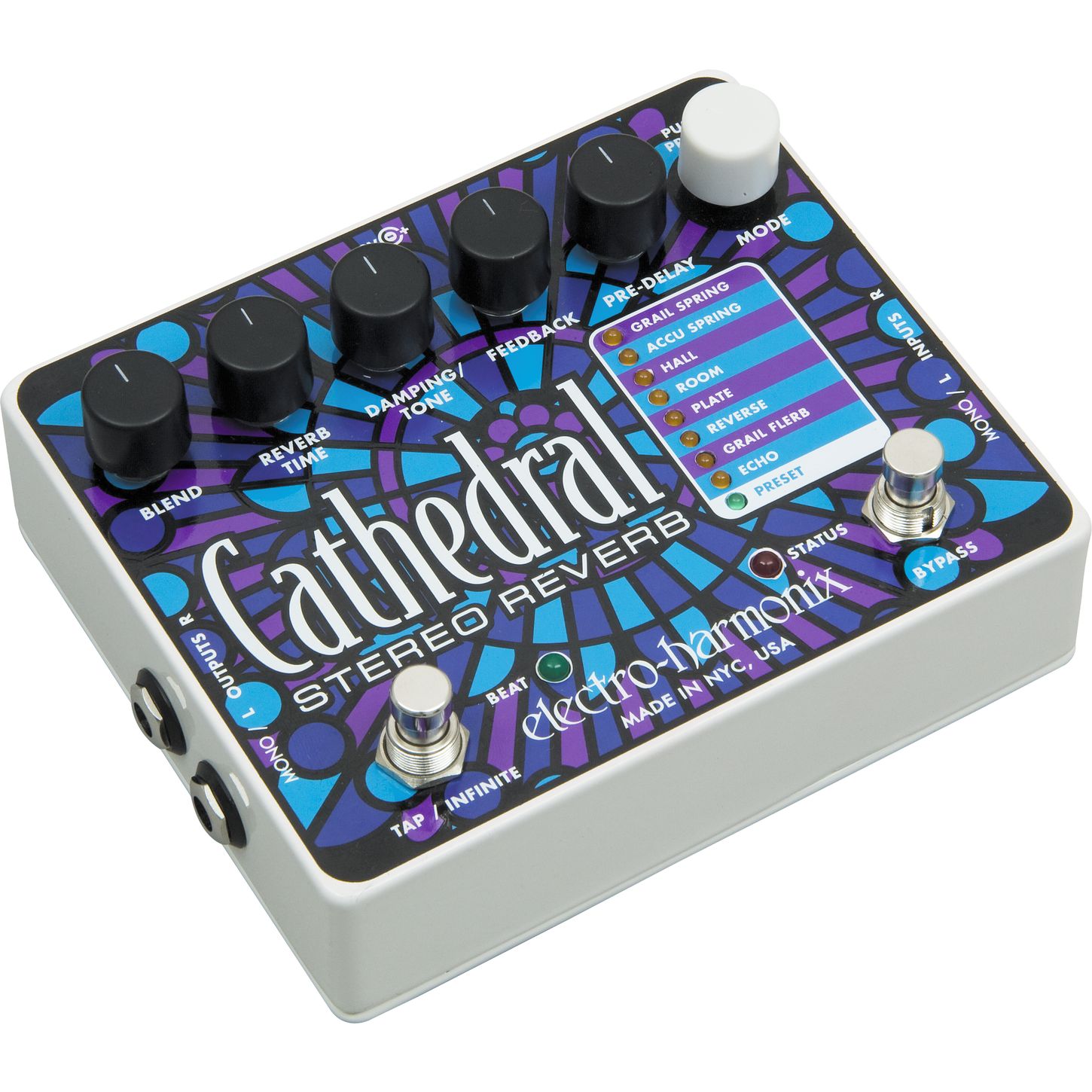
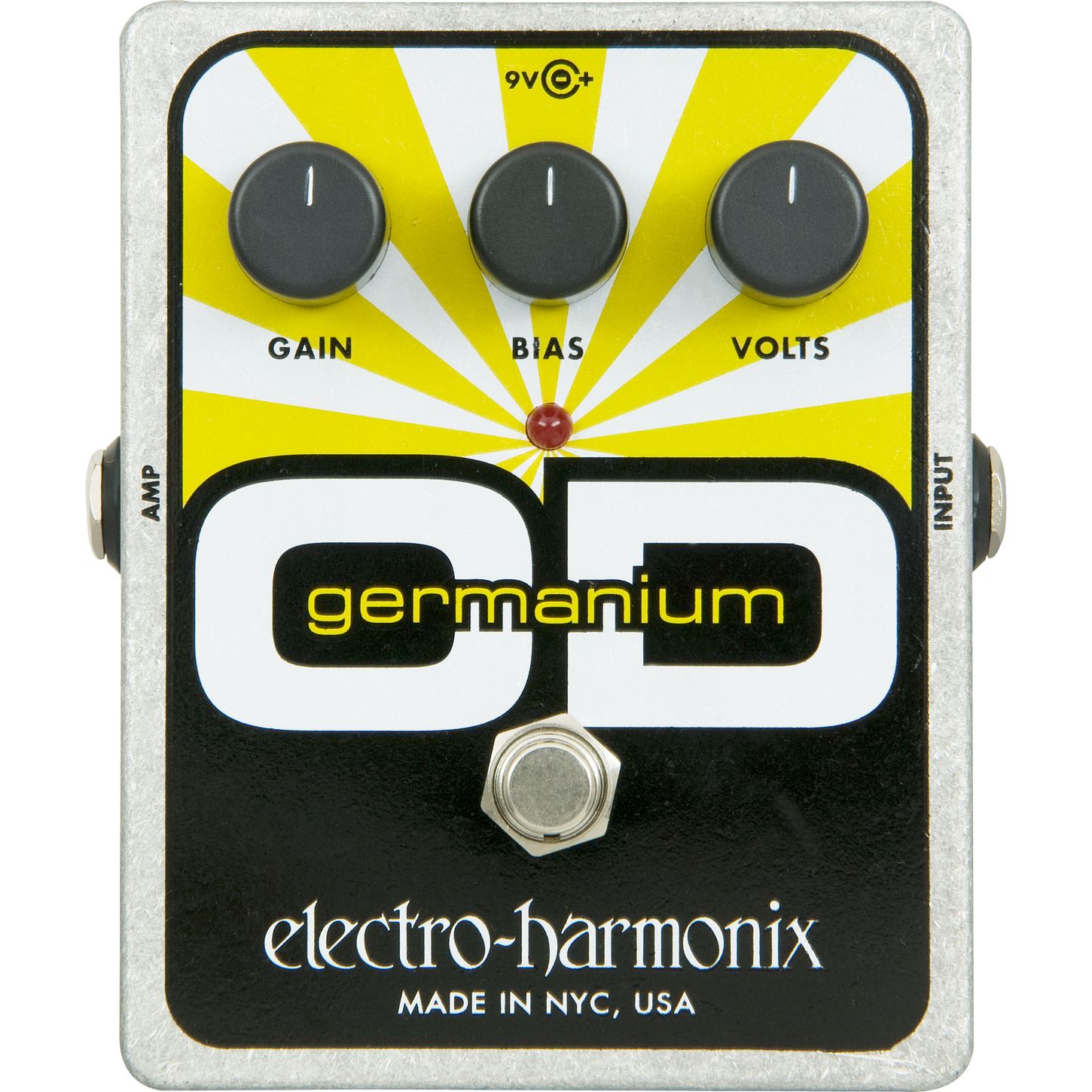
Remember this if you ever get into collecting or even buying pedals that use Germanium.  You can not really base your experience on anyone else's pedal, you really should demo the pedal yourself before getting one, especially if you're going to be paying 100's on an original Fuzz Face.  Big brands like Electro Harmonix claim to put in the time to find the "good" chips, but that does not mean there is going to be no variation.


Day 45 

Ugh, I've got a seriously bad sore throat.  It would not be so bad for practicing, but coughing so much makes my brain slosh around and gives me a headache.  So I basically just practiced quiet chords and unplugged blues and rock stuff.

I did plug in to Rocksmith today though, I'm pretty sure that's a condition of the challenge lol.  I had it turned down while doing my practice tracks(chords 101, 301, the Hammer on practice track) and played Guitarcade(string skip, chordead, Scale Racer).  You know, you get used to playing so loud you can't really hear your own strings all that much... but nothing makes you sound like a "newb" to your own ear than doing all this stuff with the twang of an unplugged in guitar lol.

That's one of the things I figured they should have done better with in the 60 day success story adverts on Youtube.  They should have recorded the sound directly and not so much with a mic near the player.  I think the players were even better than they sounded because the string sound was twanging around in the background while they played, and that just messes with people's hearing and expectations.


Friday, January 24, 2014

Straps and Kazoos and Day 29

I have a strap problem.


It is weird some of the things you realize about yourself.  I've known for quite some time that I try to get the strap that matches best with my instruments, to me it was common sense, something everyone does, right?  Well apparently I have something deeper than that.

My girlfriend and I were at the music shop earlier this week and looking at the acoustics on the wall.  They had 4 of the same model, just different adornments and cosmetic changes on the wall.  It is at this point I want to emphasize that they all sounded pretty well.  I looked at all 4 and listed them to myself "this one here is most like the kind of bass I'd go for".  It was made of a rare figured wood, with just a few adornments.  "this is more like the electrics I'd go for".  It had more Gibson-esque inlays and adornments with a solid color.  "I think I like this one least".  The least one had garish inlays all up and around the neck, and the body we very embelished with abalone, and even the color was a color I shy away from.  No way does this guitar say anything about me.


Then I went to look at the straps they had at the store, which were situated so that I was looking at these guitars while I looked through the straps.  They had the usual nylon, something I'd only get for a super pointy 80's guitar I'd never buy in the first place.  Then there was this why leather one with these tasteful, almost japanese styled flower imprints dotted here and there.  It matched very well with the garish looking acoustic, and suddenly if I was going to buy one of these 4 acoustics, the one in last place suddenly became a contender for first place.  It was then that I realized I had a problem lol.

Realizing a problem is the first step to fixing it.

I hope.

This is the part where I be a responsible example and tell you that you should pick a strap based on comfort first and looks last. But, come on.  That works if you're being all "zen master" but we all know its more "oh this looks cool... is it comfortable".  Its fine to go for looks, just DO NOT FORGET the comfort part.  Oh and its physics, if your guitar is hurting your shoulder because its heavier than you're used to, get a wider strap.  Padding can help, but not as much as adding an extra inch of wideness.


Day 29

So today I jammed out with a kazoo.  Yea, I'm surprised as you are.  There is actually a kazoo in the Session feature and its featured in a band i had to use for a mission.  My guitar has enough fuzz on it to basically be a kazoo, so sometimes it was hard to tell them apart lol.  It was a nice, uppity ditty in Pentatonic Major in the key of C I think it was.  Maybe it was A.  Not my cup of tea, but a fun experience none-the-less.  You kazoo players take heart, someone in Rocksmith is carrying the torch to legitimize your musical instrument of choice!

I also played in a "Newgrass" blues based country band.  I played in Pent Major again, but this time in G.  So far the key of G is my favorite for blues playing, so this was actually pretty cool.  I'm no where near as good with the Major Pent as I am with Minor though, but practice practice practice as they say.  Speaking of things in the key of G, I'm currently practicing transitions out and into G with the chords I already know.  This is going to open up several new paths for me, song wise.  I honestly can't remember if I have said this already, but watching a Foreign Film with Subtitles really helps me stay in one spot, and focus while I play through the chords.  I live in a world where since middle school they have taught multi-tasking as the "normal" resting state, and worked as a chef where the difference between good and bad is how well you can multi-task, so its hard for me now to sit there and do one task and not feel like I'm wasting time.  I know watching a film and practicing are technically 2 things, but it could be much much worse.

I really need to redo all my preset sounds.  My mainstay, based on a plexi/OCD overdrive sound just doesn't have enough low end to sound nice when palm muting, and also it has a little too much dirt for the kind of stuff I'm practicing with these days.  I still never got a fuzz I liked, but then again I'm not playing anything where fuzz fits all that much.  I think tomorrow I'm going to get a cleaner, fatter over drive for my primary, and a high gain "High on Fire" sound for a backup.


Sunday, January 5, 2014

Gotta beat this level! and Day 10.

There are some things I need to wrap my mind around in this new kind of format of "game" learning.

As a gamer I have this achievement habit, and I don't mean just the "chieves" that are now on consoles.  This goes further back.  This is the desire to stick with a certain level of a game(like Mario world 5) until I get through it nicely, and then use warp tunnels to never have to deal with that shit ever again.  If you go at music like that, you're going to suck.

A song is not a level.  A practice track is not a level.  You need to keep at them, you need to be able to do them without notation in front of you, and without Rocksmith telling you how to play.  That's the point of this, right?  You want to learn guitar, not learn how to play a "game".  I still go through each practice track at least once a session, and I go through the newest one 100% perfect twice.  I focus on not getting it "right" but making it sound good.  Making it sound good is just as important.  You might think "its a practice track, what does it matter" and I say that if that's your approach, you're making things harder on yourself.

Unlike a certain infamous Guitar Hero episode on South Park, you will not be asked to remember one of those songs to play without the game.  That's isn't the point of Guitar Hero.  Committing songs and riffs to muscle and mind memory is very important, and doing it with the smaller and easier pieces of the practice tracks is a good start.


Day 10

Had a frustrating day today.  I'm no stranger to bends on an instrument.  I have particularly strong bends because I typically play bass.  I don't just typically play bass, I use Lo-Rider strings that have lots more tension.  When I demo a bass at a bass shop, the strings seem like loose springs to me in comparison.  I don't know if the game was just having a hard drive detecting them, or they have an insanely tight tolerance for bends.  I was so angry at the Bends lesson because rage-quitting and doing something else more productive would mean I have to start the lesson over again.  So I finally, with lots of cursing, got to the practice track, completely ignored and worked on some riffs I have been developing, and turned the game off after the save.

The whole day wasn't wasted, I did my usual warm ups, and got new high scores in each of my warm up games.  My errors with Duck Redux seem to have been from me fretting too hard.  I do not think that's the only problem, I think Duck Redux is flawed in that aspect, but I am able to play again accurately by using a light touch on the E string above the below the 5th fret(towards the headstock is below in music notation).

I'm starting my march toward the chord lessons.  Its time to face the beast.  I was supposed to start learning songs today too, but I did not get around to it.  I got more than my hour in(I've yet to stop at one hour in all the days so far), and I'll get started on songs after or during my chord training.

Sunday, December 29, 2013

Bass cheat and Day 03

I have mentioned that I am much more of a bass player than a guitar player.  I can play several genres of music in bass, and a bass in my hand feels natural.  In Rocksmith 2014, there are 3 career paths you can choose from: Rhythm, Lead and Bass.  At any time you can switch between them easily on the main menu.  I did find a flaw with this... your missions are not career specific.  This kind of sucks because Missions are sort of your road map of how to learn.  Also, this means I can essentially cheat.  If there's a mission that is hard for me to get correct with Lead guitar, I can switch over to bass and fly through it(at least now at the beginning).  I will have to keep myself in check, and also I will need to make more accounts so I can learn the others separately later...

So the bass is pretty awesome.  I recognize the amps that they have modeled for bass.  They do not have my particular amp(Thunderfunk), but they do have Eden, SWR, and a few others that are descended from the amp mine is descended from.  I was able to dial in a close enough tone to what I generally play with, and was able to jam pretty successfully with an in game band.  Really fun, and only a few issues.  The audio lag is more noticeable for me on bass, but that's because my amp is one of the quickest response amps ever made, so I feel the lag much more on bass(I really need to get my cable situation set up to reduce this lag).  Also the tracking of my note playing is behind, and this could be a software issue, because I don't think I play all that super fast on bass.

Still, bass was fun, and they do have some fun bass songs available for DLC.  If you want to do more than chug your E string to the rock offerings of the original set, then download the Soul Classics pack.

Day 03

I decided to warm up with jamming in the Session menu, and ended up going through a lot of the missions.  They showed me what I had already discovered, that the scale shape can stay the same moving up and down the neck, and you just change the key you play in.  Next they had me choose several types of bands to play with.  I really liked the Electronic Campfire whatever band, I can't remember the name, but campfire will get you there.  Its sort of a folksy/electronic band with a clean sound from the guitar, I had a lot of fun with it.  I sounded like crap with the Grunge band.

They keep giving me missions to play for 10 minutes with various bands, and at first you might think "omg, I just came in here to warm up" but then you remember, you're memorizing the scale shape, and also learning how the notes in each key sound and what works.  They had me play with the tempo, and change keys while jamming.  Once it started having me play with the Vintage Rock band, I started having a blast.  I liked what I came up with in the sessions so much, that I played well over the 10 minutes, and even grabbed my phone.

Yes, I recorded myself.  No, I'm not prepared to have them on the blog yet... unless for some reason I get the request from those on my G+ and Facebook account.  Anyway.