Showing posts with label amplifier. Show all posts

Friday, February 21, 2014

Gaining volume and day 57

Gain and Master Volume


To a bassist using solid state, the relationship between these two are very confusing.  To a guitarist, it is a little more obvious.  If you ask both what gain is, they'll usually give you a blank stair, and the guitarist will talk about getting a dirty signal.

If you look at a guitar as a signal transmitter, you can perhaps understand gain a bit more.  The signal from your guitar is relatively low, that is why passive instruments with no batteries are still the most prevalent.  The current created by the magnets and the strings is enough of a signal.  When it gets to your amp, it will encounter 2 stages in most amp designs.  The first stage is the "pre-amp".  This is the stage where this tiny, small signal gets boosted.  This is where your tone is "shaped", if you are to make changes to a signal, its much easier to fine tune the signal if it is larger. That is what the Gain does, its a knob that increases how big you transform your signal.  If you make the signal very large, you get pre-amp distortion.

(Pictured: to the left are the small pre-amp tubes, to the right are the large power amp tubes)

After the first Gain stage, the pre-amp, the signal goes to the power amp stage.  Again, this stage takes whatever signal you give it and makes it much larger so that it can power the speakers enough to make a mechanical transition of the signal.  If you have boosted the signal to great levels in the pre-amp using gain, then it will distort this power section as well.  It also means you get a HUGE increase in volume.  Power amp distortion causes the tubes to get very hot, and will wear out your amplifier components.  Power amp tubes will glow with the fire of a thousand suns when overdriven hard.

(pictured: power tubes, some people aren't used to seeing things lit up like this in electronics unless its LED's)

That is why the Master Volume knob was invented.  It sits between the Pre-amp and power amp stages(technically it is pre-amp).  With it, you can bring down the signal strength before it gets to the power amp section, but it will let the pre-amp distortion through.  Pre-amp distortion is popular because it is much lower heat and voltage, and is also cheaper to do all around.  You can get that distorted sound while keeping the power tubes working at normal temperatures, and keep your ears from getting split from volume.

Solid state bassists, of which there are more than tube users these days, don't have this kind of distortion usually.  So how do they know how much gain to use?  Well... they get a helping hand.


Day 57

I have pretty much explored my guitar amp and can now manipulate it to do what I want fairly quickly.  Not too bad for having it for a decade right?  Yea lol.  I made it a point to know how amp EQ works with bass. A lot of people I've known that played kind of have these super complex and powerful EQ's and have no idea what they're for.  They max them or set it all at 12 o'clock and call it a day.  Then they talk about needing this or that pedal for this sound.  I wanted to get away from that.  It is a habit of mine to see that kind of stuff and want to not be that way.  When I got the Thunderfunk, I was like "I really REALLY need to educate myself if I'm going to have this kind of amp". I remember my bass bud coming over a good number of years back and him not being happy with not getting a Claypool sound.

"its gotta be his fingers or his carl thompson"

I informed him that Claypool likes to play full mids blasted.  A "frowny" if you look at it on a graphic EQ.  I EQ'd it in, and sure enough, there it was.  He then played Tommy the Cat and made me realize how much I suck at bass.  Anyway, recognizing EQ'ing and sounds has always been important to me.

So far I switch between as light a distortion as this amp can get(which is not very light lol) and a high gain metal sound, which it is surprisingly good at doing.  Sometimes it gets pretty fuzzy too.  I have some stuff to learn about the frequencies and how they interact with the band.  Like, I don't know the mid frequencies in Guitar, so I don't know if boosting them will interfere with the bass player's sounds.  The whole reason you do not want to scoop a bass live is that you kill "your" frequency.  You boost where you overlap with the drums, and you muddy up the guitarist by interfering with his highs, while your relatively instrument free play area of the "mids" is cut all to hell.  That's a "scoop", and its only great in your bedroom.  I need to research the guitarist's play area.  It sure seems a lot of people scoop a guitar and it seems more accepted.


Thursday, February 6, 2014

British vs American amp tone and Day 42

British and American tone

You see it practically everywhere when you are looking at instrument gear now.  Digital is pervasive, and since there are a lot of "amp modeling" going on, you have to describe the amp type without using proper nouns.  Even many tube amps now have a "American" and "British" switch on them to change their voicings.  What exactly does it mean?  Well the American amps of the late 50's and early 60's were clean sounding, while the British amps of the 60's brought in the more aggressive distortion.


(ACDC is a great example of pure British tone)


The Tubes:  A sort of, but not really, truth

Technical jargon ahead, skip if you want.  Marshall's first amps were essentially Fender amp clones.  They did not have the same tubes as Fender, but they did have similar ones that were sold surplus by the US military.  Soon they switched to more locally made KT66's.  By the time Jimi Hendrix was popular they were using EL34's because KT66's were becoming cost prohibitive.  Fenders almost exclusively used 6L6 Tubes.  The problem with this definition is that as you are aware, Marshall used 3 different tube types, and then Vox also introduced EL84!  Today it is accepted that EL84 and EL34 are the "British" tubes.

The Sound You Hear

The big Marshall change to their early "Fender" clones was that they tweaked the circuitry to distort much faster than a Fender.  These changes and the change of tubes essentially means that the "British" sound from a Marshall is a mid-pushed distortion that backs off on the bass and treble.  This is what you will hear with your ears, no matter what the tech jumbo says.  So "American" "Fender" sounds are boomy and chimey, with a smooth and light distortion.  Fender clean is very clear, very precise and ringing.  The "British" sound is mid-range aggressive, even the "clean" has a little bit of harmonic break up, making it described as "creamy" and "fat" and the distortion is stronger and grittier.


(almost always performed with a Fender Bassman)

Not so clear Anymore

When you see "British" vs "American" you really have to think about the music of the 60's.  Over half a century later, and there are amps from each side of the pond that do what the other is famous for.  Mesa and Soldano amps from America have distortion in huge amounts.  Vox, even in the 60's, made super clean amps in Britain that rivaled Fender.  Several amps now use BOTH types of tubes and let you switch between or blend them.  There are digital circuits and active equalization that can make the cleaner 6L6 tubes sound "British", and this is a common usage for them now.  Marshall even uses 6L6's in their big series amps because they are more even and you can EQ them to sound "British".


Day 42

Started out today doing the Palm Mutes and Hammer On practice tracks again.  It has been a while since I had done that because I was working up my skills through playing on the real amp.  The Hammer On is really more a timing practice for me, I'm pretty proficient in Hammer on usage already.  The Palm Mute practice track gets my speed and accuracy up.  I can kind of get into a relaxed, slow chugging mood with Palm Mutes.  I think Thunderkiss '66 is fast, and then I play the Practice track and realize I've got a ways to go before I"m "fast".

I keep alternating between practicing what I need to practice and practicing what I want to practice.  What I need to practice is academic and building of skill.  What I want to practice is all the song ideas in my head.  Both help with creativity and skill, but in different amounts.  I think academic basic skill building is about 70% skill building, 30% creativity.  Practicing my own stuff is 30% skill building, and 70% creativity.  Doing the academic gives me new skills to make more creative stuff, while doing my own stuff allows me to put my skills together in new ways, pushing me challenge my skill in ways that practice tracks just do not do.

For example: the hammer on practice track.  Its a ton of hammer ons.  Its me using hammer ons in specific ways at specific times, and pushing me to do them faster, more accurate, and in different combinations.  However, when I play my own stuff, I'm stringing hammer ons with bends and blending them with chords.  I'm saying to myself "can I do a bend, hammer on, then unbend, and slide?"  At first, probably not, but later on I work on it, and yes I can.

Its a balancing act, and I tend to fall on the "practice your own stuff" side of the balance a little too much.

Sunday, January 26, 2014

Spotlight Guitarcade: Scale Racer and Day 31

Scale Racer


Scale Racer is a game where by you steer a car through lanes of a highway by playing scales.  The highway has cars you must avoid, and also you are being chased by the police.  If you wait to change lanes till the last moment, you can make the police cars crash into civilians.  This scores you extra points on top of whatever it takes to finish the course.

I would say that this game most resembles and sounds like an old racing game that all my cousins and I played tons of: Rad Racer.  There are elements of the newer Need for Speed: Hot Persuit, and also a bit of Sega's Outrun.  The colors used on screen and the car chosen to represent you makes me feel that they mainly used Rad Racer.  The music also more reminds me of the Nintendo's sound effects than any arcade game.

Scale Racer is probably my pick for the best average between learning and fun.  Scale Warriors wants to get your used to switching between scale parts, but you're memorizing enemy patterns more than scales, while Scale Racer more easily teaches you the scale shape.  This is, of course, just my opinion.  I have barely touched Scale Warriors, but I have played the hell out of some Scale Racer.

Additions, criticisms? Aside from being able to edit your own parameters, which is lacking in most Guitarcade games, I think the main changes to be made would be cosmetic.  I think it would be really cool that if your choice of headstock, inlay, and amp skins would affect how your car looks and sounds.  Just a cool thought.

Day 31

I'm over the 1/2 way point?  I'm having such a fun time doing this blog that I'm not sure I'll stop updating at 60.  I'm getting encouraging feedback from friends, and thinking of stuff to post above the memoirs gives me a sort of satisfaction that I've missed since highschool(I'm a nerd).  I have some ideas on what I'm going to do.  We'll see how it goes.

Instead of messing around with the in game Tone Shaper section, I ended up playing with my actual amp for much of the day.  I found that it actually has a pretty good hi-gain setting that allowed me to nail "The Beautiful People".  Yesterday was the loudest I have had the amp up while doing palm mutes, and I have to say that I see why high gain amps are popular for metal.  It is not just the howl that they give, it makes palm muted notes sound amazing.

There are a few tones I'm having a problem getting set up though.  The lighter overdrive settings pretty much do not exist in this amp.  I am getting addicted to the tiny bit of dirt when doing blues inside Rocksmith, which is funny because I have always disliked the "Tube Screamer" pedal clones, and now I think I want one.  Tube Screamers are named more aggressively than they really are, its actually a low gain, low dirty overdrive sound.

The amp I do have is really good at getting the ACDC tone, which is my favorite guitar tone of them all, so its not like I have fallen out of love with my amp.  I've had this thing for over a decade now, and its worked flawlessly.  At the time I got it, there just was not the low watt tube amp options that there are now.  I do have a mid-2000's amp modeling digitech amp station, which is kind of like a less advanced "Tone Shaper" from inside Rocksmith.  I will have to look at getting that Tube Screamer tone with it.  Nu-metal and Triple Rectifiers were all the rage then, so it abounds with high gain amp sounds, I don't know how much low gain stuff it can do.

Wednesday, January 22, 2014

Self indulgence and Day 27

Warning: this is purely a post about gear.  It is a What If scenario of if I had all my money from my bass rig in my hand and went to buy guitar stuff instead, what would I have.  Some people are turned off about this sort of pie in the sky dreaming.  I won't be selling my bass gear, EVER.  Its just that its day 27 and I need topics to go in between my other topics.  So excuse me if I get self indulgent for a while, feel free to scroll down to the Day 27 memoir.

Well first I have to decide what to do about the money in my cabs.  Guitar cabs have the same advantage as sub-500 dollar guitars, they sell really well.  So the markup on them are less than bass cabs.  Also, they are smaller and lighter by their very nature compared to bass speakers.  Much of the money in my bass cabs are features that you just do not get in guitar cabs to amplify the price.  So, I am going to allocate my speaker costs 50% into the amp and 50% into the guitar.

The Guitar


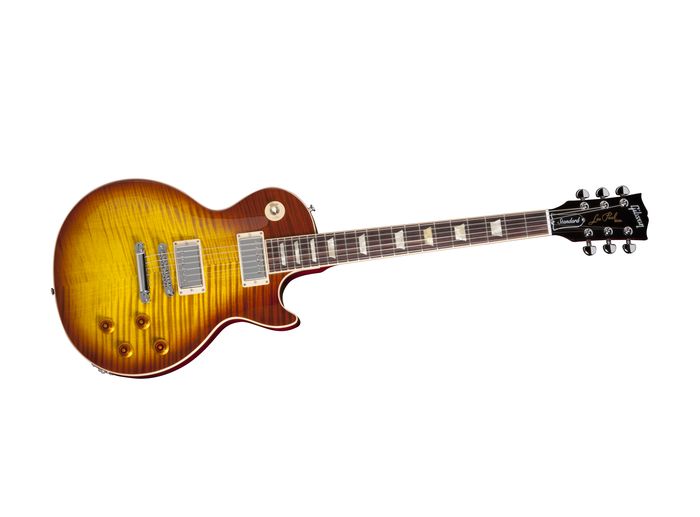
Wait a minute, you may say, I thought you were into SG's?  Well I am, but fortunately SG Standards with the options I want are doable under $1000.  Plus, the last few years Gibson has been futzing with the pickguard, and I like the 70's "batwing" pickguards.  So used is where I'd go these days.  Also I have an SG already, so to get the most bang for my buck, I'm looking at Les Pauls.   I change which bursts I like all the time, currently I'm on a Caramel-burst or Tea Burst phase.  These Standard Premiums are being liquidated for a huge mark down as of this writing.  Flame top?  Check.  Binding? Check.  Pickup covers? check.  Trap inlays? Check.  No pre-installed pickguard, meaning I don't have "worm holes" in the top?  Check.  This is the picture of a Les paul that people have in their minds when they think Les Paul.

The amp


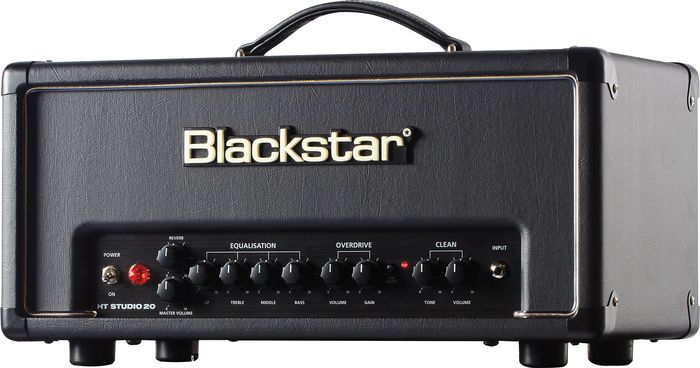
For what I do, I think 20 all tube watts is what I need.  I would go with the 5 watt version, but I plan on using the clean channel for any heavy metal pedals I want to change the sound with.  I keep switching between wanting Egnator and Blackstar, but currently I hear so much good stuff about Blackstar.  Also, they were once employees of Marshall, so I'm not too far from my old fanboy self when I go for Blackstar.  An effects loop is a must, so the Marshalls of this price range are out.  I would get two of the 1x12 cabs they have for their HT5 series.  Each is rated at 50 watts, so I'm still safe.  I like having 2 1x12's for the same reason I did that with my bass, its just more versatile of a set up.  I enjoy being able to keep one at home, and keep one at a practice spot if I wanted, and use them both if playing outside.

And... I have a ton left over. There are more expensive Les Pauls, but what's the point?  That's my dream Les Paul right there.  There are 40, 50 and 100 watt version of that amp, but that means I'd go deaf before I have the natural tube overdrive I like.  Sticking with the premise, all being spent on music gear, I guess I'd go looking for my dream SG, which would be used and I'd still have money left over.  I'd have a "beater" SG and a fancy SG, I would have enough left over for a les paul studio.  Maybe a caramel burst Les Paul Studio pro so I'm not too scared to take a Les Paul to friend's homes for jam sessions.

And there's a lesson to be learned in that last sentence.  Well, that'll be another post for another day.


Day 27

I did lots of stuff today.

Aside from my warm up in Guitarcade, I'm adding the Chord 101 and Chord 102 practice tracks to the warm up.  I have a solid 45 minutes of "warm up" time in Rocksmith now.  I know as I type these up it might seem like I do less and less Rocksmith, but its not true, its just that its kind of routine at the moment while I work on chords.

I'm ending up with 2 separate journals. One is for theory notes, scale shapes, chord charts etc.  One journal is my song notation book.  Each song I put in here will have its chords, its key, and whatever information I need to memorize.  I will have different versions and strum patterns for them, and then set up my personal arrangement.  Why have a personal arrangement?  Well if someone asks you to play a song while they're just hanging out, they aren't looking for 5 minutes of lone guitar and no vocals.  They want the high points of the song that are recognizable, so this is the kind of "1 minute arrangement" that I want to come up with for requested songs.

I am practicing a very versatile song that I feel is going to help me with lots of my chord playing.  It is "Simple Kind of Man" by Lynyrd Skynyrd, and the lyrics just rub the the wrong way.  I've grew up hearing this song and I know a lot of people that know the song.  The song is 3 chords, and you can do a very simple version, a version with advanced strumming patterns, and even a power chord arrangement over it.  There's also the version that most resembles what you hear on the radio, with lots of embellishments.  I am very good at going from C Major to A Minor thanks to Rocksmith, both of those chords are taught by the Chord lesson tracks, and also used fairly early in Return to Castle Chordead.  I'm needing to work the most on the G chord, which is new to me.

Saturday, January 18, 2014

Solid State and Bass, also Day 23

The first question people will ask on this subject is "what is the difference?" and from a technological point of view, Solid State amps use diodes and transistors instead of tubes for their pre-amp and power sections.  There are hybrids, particularly with bass, where there are tubes in the pre-amp section and solid state in the power.


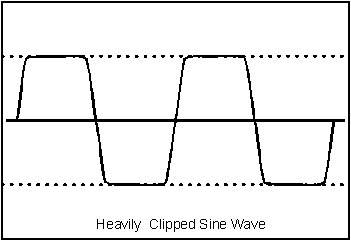
The problem is that a solid state amplifier will not compress a signal once the signal goes beyond what the design is created to handle.  Tube amplifiers will round off, compress, and fatten a tone with lots of harmonics, and send this signal to a speaker and it creates this magical "guitar" tone that we know today.  In a solid state amp, this signal is hard clipped.  It turns a mountain into a mesa, with a fat top.  You send this flat top signal to a speaker, and it makes the speaker want to destroy itself.  Well, not really, but a speaker is designed to move in and out, not to move out and stay out during the "flat" part.  This causes a speaker to malfunction.

Now why in the world would anyone want to use solid state?  Well, they cost less.  Their parts are manufactured for a myriad of electronic gadgets, so you can get the pieces and throw them together.  They also are more reliable, as there is less heat, and more stable parts used, in general.  There is another section of people that like them, and that is people wanting 100% clean tone.

The non-compressive nature of Solid State means that there are not a lot of overtones introduced to the signal, you have a pure clean tone.  Sure this kind of sucks if you want a creamy, rich, bell tone from your clean channel, but if you're applying a lot of amp modeling, effects pedals, or computer modulations, then a solid state signal is the "blankest" of canvases.


Then there are the bassists.  Bass takes A LOT more power to get the sound out into the audience than guitar does.  Some bass amps with tubes get up to the 300 watt range, but that's pushing it.  These monsters weigh over 100lbs without a speaker cab.  While on the solid state front you can get into the 1,000's of watts for under 1,000 dollars and under 20 lbs.  Now, 300 tube watts, when they are overdriven, can get insanely loud, but you're losing some of your "clean".  Solid state provides the largest, cleanest, most defined headroom for bassists.  There are other things to take into consideration, wattage is not a guarantee of volume, and the type of power supply will influence the sound as well, but in general bassists are much more accepting of solid state than guitarists.  Because of that, bassists now have literal pocket sized amps with 500 watts, and 4x10 speaker cabs that weight under 40 lbs.

Day 23

I warmed up with my Guitarcade as usual.  I also played some of the game based on Bending.  While still kind of inaccurate, the game did prove to be fun.  I think for a beginning guitar player, they should have stuck to the thicker strings further down the neck, because nothing will give beginners blisters faster than bending on the B at the 12th fret.

Anyway, I did the harmonics lesson.  Harmonics on guitar seem dreamily easily.  I wish they were this easy to do on bass guitar.  In bass guitar, harmonic play is like a top tier thing, up there with piano-esque tap play.  Jaco made himself legendary by making it a hallmark of his playing.  On guitar they almost seem effortless.  I know the lesson said that not every spot on the neck will make a harmonic, but it seems that just about any spot did.  This is not true of bass either lol.  Anyway, I got through the lesson pretty easily, but that might be because of my prior bass practice in the subject.

I did a lot of "amp" practice today, meaning I did it w/o Rocksmith.  It is just easier for me to practice scales and the songs I know with my amp.  I have a 25 foot guitar cord, and the amp is in a more convenient spot.  So I start a movie on netflix, put the amp on clean, and practice scale runs while I watch the movie.

I am really feeling the need to learn more blues-rock and rock style playing.  I keep doing the bluesy stuff I have practiced with for years, and I'm wanting to learn something new that I can improv in.