

In my post titled "Regression" I talked about being able to back up in time to find the influences of your favorite bands that would in turn be able to influence you in your playing with the same genre. Sometimes though, you do not have to go back, but you can branch sideways in time. For this I gave the example of "Grunge" in the 90's.
The person I was talking to likes some Nirvana. I told this person that this was only natural, as their favorite genre was Punk. I said that if you take the top Grunge acts of the early 90's, you can basically split them with Grunge and a more classic style and see EXACTLY how they formed their music.
If you take the Sex Pistols, The Clash, The Ramones, and Black Flag, and you add the typical Grunge characteristics to that style of music, you're going to get Nirvana. Kurt Cobain wrote in his own personal journals that the Sex Pistols were thousands of times more important to him than The Clash. He was also a huge fan of the pre-punk band The Stooges, and of their lead singer Iggy Pop.
If you look at the "world music" influenced heavy rock of The Who and Led Zeppelin, and then listen to Pearl Jam, you're going to see similarities there too. Heavy 70's rock mixed with Grunge fits with classic Pearl Jam perfectly. If you take heavy metal, like Black Sabbath and Motorhead, and mix that with grunge, you're going to get Soundgarden.
Being a fan of Grunge might lead you to being a fan of playing more genres than you ever thought you would. Nirvana can lead you to Soundgarden which then leads you to heavy metal, or it can lead you to Pearl Jam which will lead you to classic rock. All the while you can be going back and finding those influences and before you know it, you are a very very diverse musician.
Day 22
Holy crap did I play a lot in day 22.
Started out before lunch doing my warm ups in Rocksmith. I have pretty much stopped doing Gone Wailin' every day, and I only play it when I'm in the mood for it. It has helped me with my chord strumming, and I very much appreciated it, but I have lots to do now and I feel like I can drop it. I still find Ducks Re-dux good for getting my mind thinking about the fretts, I kind of need it to get past the 12th fret faster, as I'm getting into some songs that use a lot of stuff up there but that marker skip to 15 is F'ing me up.
After lunch I checked out the Everlong that is in the game. I had pretty much stopped playing this version because its a version of the song I never see myself playing. I know the parts that I don't play, but I don't really practice them. As I've said before, Everlong is done live with 3 guitars and a bass. The "Lead" version on Rocksmith has stuff in it that sounds HORRIBLE unless you have a rhythm guitarist backing it up at the very least. Anyway, I was doing a few things wrong, and I needed to know if I wanted to do the reverse lead up on the last uptake of the chorus. I also went to youtube to see more versions of how people play it online. I fixed a couple of things I was doing WAY wrong, and it has made my version sound much better.
I then decided to record my little bits of songs I use to practice the Pentatonic minor/major scales, and a few other little phrases I play a lot. I named each one and recorded them on my phone in case I ever go a long time w/o playing them and want to remember them.
I then practiced several songs in Rocksmith that I had already done. Blitzkrieg Bop I have learned and played to 95% completion. I just mess up a little going through the whole song, but I know the parts. That is by far my most done song, and its also rated the "easiest". Though, Everlong has several songs rated below it on the easiness meter, and I disagree with it. I tried Thunderkiss '66 and did quite well. I was right to wait till I had done a ton of palm muting. I am very surprised to do that it is tuned in Standard E also. I did 16 Saltines and I am fairly confident that I could get all of it, except the solo, with an evening of really focusing on it. I tried one of the random "I don't know this band" songs because it was listed as easy, and it was, but omg, I think i'd rather mute the TV. There were a couple of more that I can't think of right now, I'm typing this the next morning instead of after the practicing like usual.
I watched a movie and playing in the pentatonics while watching the movie. They are easy enough to do without looking at the fingerboard, so I was fine even though it was a sub-titled Japanese samurai movie. So all in all, it was a real productive day.
Showing posts with label Everlong. Show all posts
Showing posts with label Everlong. Show all posts
Friday, January 17, 2014

Thursday, January 16, 2014
Overdrive, Distortion and Fuzz day 21
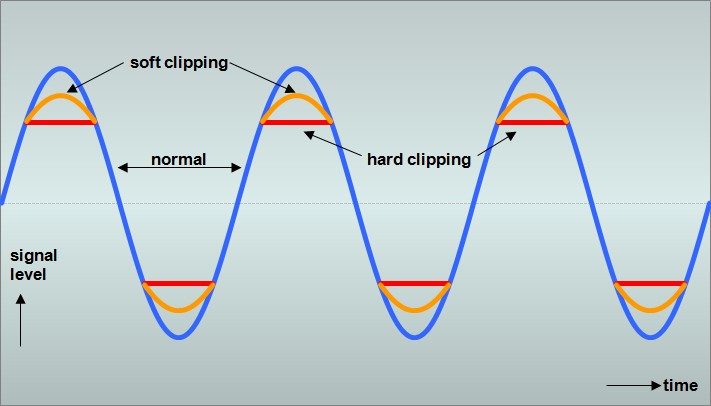
Imagine a guitar signal as waves drawn on paper. Sharp mountain looking waves. In Overdrive, these waves are rounded off. They are squished, or compressed, and this creates fat, rounded hills rather than jagged waves. They are fat sounding, and full of new harmonics and multiple frequencies in the same area. You get your guitar's tone, but also just a bit of dirty signal. You can either increase your guitar signal into the amp and overdrive the tubes in the pre-amp, or you can push the amp's volume to louder than it is meant to go and get a power amp overdrive tone. This really decreased the lives of the early tubes(not to mention it made audiences deaf). Later, players wanted to be able to do this all the time, so they created pedals that would boost the signal before it got into the amp. This would guarantee overdrive, these were the first Overdrive/boost pedals.
After the pedals came to be used, players found that you could REALLY push that signal through and it would distort the sound into a crunchy, broken up sort of sound. They created pedals or modded amps so they you could puts large amounts of gain through a tubed amplifier, and this created Distortion. It is enough overdrive to lose some of the characteristics of the guitar your playing, but it created enough rich harmonic overtones that it still sounded musical.
One day someone went mad, and said "what if we just cascade the signal on top of itself in a pedal and caused it to get so broken that you can barely even hear the original guitar's sound" and low and behold, Fuzz was born. Fuzz can get so strong that you practically can't hear the original guitar signal put into it, but it creates a nice, enveloping fuzzy pattern that still responded to the guitar player.
So as you can see, Overdrive, Distortion, and Fuzz are all related, and are almost steps in a sequence. Its a bit of light, medium and heavy "dirt". In a later post, I will explain why distortion is such a problem for bassists. Hint: it has to do with that flat line in the picture at the start. That flat line sucks.
Day 21
I went back into the lessons today and did the Double Stop lesson. This is yet another guitar thing that I had heard of that I had never really learned what it was. Turns out, I knew what it was, and I did a whole hell of a lot of it with playing bass lines. Its just that I knew it as droning. I am kind of let down by what it is, because it sounds more interesting than it is. It is just two notes played at the same time and typically is not part of a chord. Now, I'm not sure if doing a octave thing with it counts as being a double stop, but I do that a lot too, its one of the reasons I took to playing Everlong pretty easily.
Which is kind of funny. I already knew how to do power chords because of the Green Day songs I had learned years ago. I already knew how to do the octave parts because, well, I like to do octaves on bass, I've been doing that for years. So the only real part that was holding me back on Everlong were the thought that it would be too difficult, and the Drop D tuning, which I never did before.
Today I also started playing with the Pentatonic major. I have to say after playing tons of the minor scale lately, I really like the sound of the major. For some reason it makes me want to make slower, soft rock music. I had to record a little piece I came up with while just practicing it. I've not memorized completely the pattern yet, but I'll be working on doing that for a while. Repetition, it can get boring, but its the only way to learn.
Monday, January 13, 2014
Legendary: Brian's Guitar and day 18
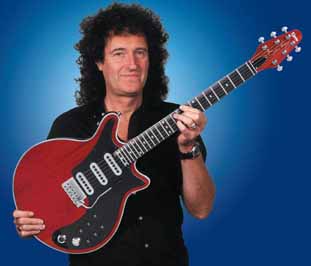
Brian May is the guitarist for Queen, and one of the greatest rock legends.

In 1963 though, he was just a kid with almost no money. What he did have, though, was a father that was willing to help his son achieve his dreams. Brian and his father scoured the neighborhood for materials. Someone that lived near them was throwing away an old 18th century fireplace mantle, made of mahogany. It was worm ridden in some places, but they were able to shape a neck out of it. Next they planed some oak to be a fret board. The inlays are mother of pearl buttons they collected. The body is semi-hollow, being made of oak with a thin sheet of mahogany for the top. Next he made a tremolo with a knife and some motorcycle springs. He then found some old shelving plastic and used it to "binding" material, the outline around the body that is popular on Les Pauls.
He bought some pickups, but rewound them himself. He also sealed their pots to protect the pickups from microphonic feedback. This was important because he wanted to include a way to cause feedback on purpose. His dad had enough electrical engineering know-how to help him achieve this. He could then induce it at a whim, instead of walking in front of the speaker hand hoping it worked like Clapton and Hendrix did. I personally did not know his guitar could do this, but now it makes so much sense. There's this part in the solo of "We Will Rock You" that I used to characterize as "the guitar coming back and eating itself", but now that I am older, I realize its the self induced feedback that he designed to be in the guitar. Its genius.
It took him and his father two years to make the guitar, and now its given the world 40+ years of pure, epic, awesome rock. The guitar now is a legend, and has been named "The Red Special".
I referenced BrianMayGuitars.co.uk to make sure I got the details right, and claim no ownership of the story.


In 1963 though, he was just a kid with almost no money. What he did have, though, was a father that was willing to help his son achieve his dreams. Brian and his father scoured the neighborhood for materials. Someone that lived near them was throwing away an old 18th century fireplace mantle, made of mahogany. It was worm ridden in some places, but they were able to shape a neck out of it. Next they planed some oak to be a fret board. The inlays are mother of pearl buttons they collected. The body is semi-hollow, being made of oak with a thin sheet of mahogany for the top. Next he made a tremolo with a knife and some motorcycle springs. He then found some old shelving plastic and used it to "binding" material, the outline around the body that is popular on Les Pauls.
He bought some pickups, but rewound them himself. He also sealed their pots to protect the pickups from microphonic feedback. This was important because he wanted to include a way to cause feedback on purpose. His dad had enough electrical engineering know-how to help him achieve this. He could then induce it at a whim, instead of walking in front of the speaker hand hoping it worked like Clapton and Hendrix did. I personally did not know his guitar could do this, but now it makes so much sense. There's this part in the solo of "We Will Rock You" that I used to characterize as "the guitar coming back and eating itself", but now that I am older, I realize its the self induced feedback that he designed to be in the guitar. Its genius.
It took him and his father two years to make the guitar, and now its given the world 40+ years of pure, epic, awesome rock. The guitar now is a legend, and has been named "The Red Special".
I referenced BrianMayGuitars.co.uk to make sure I got the details right, and claim no ownership of the story.
Day 18
Today was a Sunday, so that means I had an audience while practicing. I still have a lot of work to do on making Everlong sound really nice, and it is very hard to do an arrangement all by yourself without having a way of switching from clean to distortion. Which, I can do do with my real amp, but the game amp not so much. During "Learn-a-song" it will change automatically for you, as if you have a road crew. No such luck in real life.
My girlfriend played some more of her favorite games and then shocked me with playing Smoke on the Water :) I thought she had learned that in school band, but she said she once had an acoustic. She had never gotten to play around on a electric with some nice distortion to it, so she had a lot of fun. I have several times thought about buying an extra guitar to keep at her place so I could practice over there. When I have the money, I think I'll need to get a practice amp so she can play the guitar whenever she wants to as well. She has no PS3, so I can't loan her Rocksmith.
I loaded up a metal band in session mode, the "classic" one, I can't remember what its called right now as I type. Just a week ago I had listened to it, and just could not achieve any type of mellowness with the band they presented. Now, though, with palm muting, I feel like I can at least jam with a metal band. Speaking of Palm Muting, I have heard of people using palm muting on acoustic before, but my mind just could not wrap around what or why people would do it. I decided, since Sundays are kinda crazy anyway, to load up an acoustic simulator and see how it sounded. I then played bayou, cajun sounding music for about 20 minutes. That's the sound palm muting on an acoustic does. Cajun blues. My repertoire of genres is increasing
Almost 1/3rd through the 60 day challenge, and I am very happy with my Rocksmith experience, I've learned things that even if I stopped using Rocksmith today, would be skills for playing guitar that I'd use the rest of my life.
Sunday, January 12, 2014
Blisters and day 17
I mentioned earlier about the aches I'm getting from new techniques and how I feel like it means I'm finally "learning" guitar. I guess I should go into that a little. A lot of people gloss over that, but a lot of newbie players get turned off from guitar because of it. I remember the blisters when I started bass. Callouses do form, it just takes time. Funny thing I should mention, bass players have different callouses than guitar players. I obviously did not stick with guitar 10 years ago when I got Jasper but I did turn to bass playing.
Bass playing gives you what I call "cat pads" or "dog pads". At least, from my experience. They are broad and thick callouses made specifically for dealing with bass strings. When I re-visited guitar a few years back, the guitar strings basically shredded these bass callouses. I got blisters UNDER my callouses, and even tore a callous. Over the years I still came back to guitar from time to time to play some very crappy versions of metal songs I noodled away on, and I did get an appreciation for blues, so I played some 4/4 blues rock from time to time too. I no longer shred my callouses, and as of yet I have not got my blisters, but my fingers do still hurt, especially with bends on the thinnest strings.
I have no real advice on blisters and callouses. There is no "magical" cure all with them. If you moisturize, you're going to delay getting callouses, but if moisturize helps ease the pain and lets you practice, then do it. . I can just tell you that it gets better over time. I also beg that you do not give up because of the physical pain. Rocksmith has things you can do that don't involve your fretting hand, or at least let you fret with an alternate finger. The Guitarcade is full of things that can still help out with practice even if you can't fret well. Once you get your callouses, you can even not play for a few years and come back and the strings will not be so bad. So its like a long lasting benefit.
Also, do not take a shower and go to playing guitar for like an hour. Let your callouses dry completely, you can ruin months of build up by grating wet callouses on strings
Day 17
Just an uneventful practice day that is is probably boring to read. Warm up, some palm mute practice, and then playing Everlong. Hopefully something above is worth reading ha.
Playing Everlong over and over, at least the arrangement I have decided on playing. Well, I still haven't decided completely on which arrangement I'm doing. There are some signature sounds of this song that I could try and incorporate. I don't have the technical build up of the song, but I won't be singing it, so I have to think about how bored people would get listening to the same parts over and over if I'm playing it for them. So I'm going to do a ABC method. A is the beginning, B is the buildup C is the chorus, D is the alternate picking method of A, and E is the finish I've devised with a little palm mute thing. So I would play it like this: A B C D B C E. There is a reverse version of C that I need to learn because I think I'm going to put that in as well in a 3rd chorus. I don't know, I'll play around and decide.
Bass playing gives you what I call "cat pads" or "dog pads". At least, from my experience. They are broad and thick callouses made specifically for dealing with bass strings. When I re-visited guitar a few years back, the guitar strings basically shredded these bass callouses. I got blisters UNDER my callouses, and even tore a callous. Over the years I still came back to guitar from time to time to play some very crappy versions of metal songs I noodled away on, and I did get an appreciation for blues, so I played some 4/4 blues rock from time to time too. I no longer shred my callouses, and as of yet I have not got my blisters, but my fingers do still hurt, especially with bends on the thinnest strings.
I have no real advice on blisters and callouses. There is no "magical" cure all with them. If you moisturize, you're going to delay getting callouses, but if moisturize helps ease the pain and lets you practice, then do it. . I can just tell you that it gets better over time. I also beg that you do not give up because of the physical pain. Rocksmith has things you can do that don't involve your fretting hand, or at least let you fret with an alternate finger. The Guitarcade is full of things that can still help out with practice even if you can't fret well. Once you get your callouses, you can even not play for a few years and come back and the strings will not be so bad. So its like a long lasting benefit.
Also, do not take a shower and go to playing guitar for like an hour. Let your callouses dry completely, you can ruin months of build up by grating wet callouses on strings
Day 17
Just an uneventful practice day that is is probably boring to read. Warm up, some palm mute practice, and then playing Everlong. Hopefully something above is worth reading ha.
Playing Everlong over and over, at least the arrangement I have decided on playing. Well, I still haven't decided completely on which arrangement I'm doing. There are some signature sounds of this song that I could try and incorporate. I don't have the technical build up of the song, but I won't be singing it, so I have to think about how bored people would get listening to the same parts over and over if I'm playing it for them. So I'm going to do a ABC method. A is the beginning, B is the buildup C is the chorus, D is the alternate picking method of A, and E is the finish I've devised with a little palm mute thing. So I would play it like this: A B C D B C E. There is a reverse version of C that I need to learn because I think I'm going to put that in as well in a 3rd chorus. I don't know, I'll play around and decide.
Saturday, January 11, 2014
You are the flaws and Day 16(edit: added video)
When asked about who was his biggest influence as a guitarist, the technical shredder Steve Vai said this about Brian May
"I went down to their rehearsal, and he brought me up on the stage, and he let me play the guitar—the guitar that he built with his dad [the “Red Special”]. I couldn’t even believe that I was touching this instrument! He was so kind and so warm, and for who? This kid, you know? And I played his guitar, and it sounded like Steve Vai. Then when he played it, it sounded just like Brian May. It was very apparent to me that his tone is in his fingers and his head"
At first this just looks like admiration for a fellow guitarist, but there is deeper meaning in this quote. See, there is this "quest" to get certain "tones" just like famous guitarists. People will pay 100's even 1,000's of dollars to sound like certain people. Cap10 Anderton from Youtube once said "Cobain's sound is easy to get. You have this spectrum with Kurt Cobain on one end, and Brian May on the other" It is well known that people can get close, but it is super hard to get a sound like Brian May's sound. They point at his home made guitar, referenced above, and his use of a coin as his pick as contributing to his sound, making it impossible to copy. Many guitarists know that Brian May is one of the "holy grails" of tone. So here is Steve Vai, on purpose, basically saying "don't believe that tone bullshit, when I played it I sounded like me..
Its a wonderful lesson to take to heart. Stop chasing tone. You'll get close, but a lot of it is the player. In the bass world there was a similar thing. Michael Manring idolized Jaco Pastorious. He said he spent half his waking hours trying to play like Jaco, but there was always these imperfections in the sound, the strings not ringing just right, or the bass vibrating just a little off. For years he practiced and practiced, trying to get these flaws out. He said that one day he realized that the "errors" were him coming through. These weren't flaws, this was his body's tone, his finger's touch, his mind's detail, and he learned to embrace that in his playing.
The only people expecting you to sound 100% like someone else are people that do not have the experience of trying to not sound like themselves. Be yourself, let yourself shine through. People will know what song you are playing, and they'll hear you in that song too, if they can't appreciate the time and effort you put into learning a song, then don't sweat it... or hand them the guitar and say "show me how you would do it better"
Day 16
As I type this, my fingertips on my left hand are still numb. I guess that's a step up from sore. Still no blisters thankfully. I spent almost all of today playing "Everlong" by the Foo Fighters. I learned the main parts from Rocksmith, but figured out how I wanted to play it by watching some solo versions on Youtube. Rocksmith, at least on lead, gives you the slightly higher pitched version that sounds slightly awful by yourself. Generally, live, Foo Fighters play this song with 3 guitarists and a bassist. The "lead" version is all nice when you have a rhythm section backing that up, but if you're playing by yourself, I suggest you watch how youtube acoustic arrangements are done. Of course it doesn't hurt to learn it how they present it in Rocksmith, you never know when you'll be playing the song with a partner. I'm still sloppy on the buildup to the chorus, but people would recognize the song if I played it.
For the first time since I started the game, I hooked up to my actual amp instead of just playing in game. My stereo's speakers are pretty good, aside from the "feel" of it, I did not think I was losing all that much playing inside game. Besides, in game I can switch my tones very quickly and easily. Playing through a real amp again though, it felt really good. The sound was deeper and much more full. It made me really want a high gain metal distortion style pedal though, because my Marshall isn't set up for that sound. I really really want a Fulltone OCD variation made by EHX called "The Glove", but honestly my Marshall gets close, and its not like I have another amp somewhere. So I should probably look at getting pedals for tones I can't get with my regular amp, and #1 on the list I guess would be an EHX metal muff, probably the pocket version since I like the sound of it over the "micro" and think that the full sized one is over-complicated for my needs.
Tip of the Day
There are several ways I could go from a clean to heavy tone for Everlong, but I'll share the simplest that requires no footswitching or extra pedals. This works on Gibson instruments with the usual 4 knob config. I take my treble/lead/bridge pickup, put tone at 10, and put the volume about 3. this lets the treble ring cleaner(though not 100% clean) and also more quiet. On the Rhythm/neck pickup, I max the volume knob, and I roll back the tone to about 5, this gives it a very crunchy distortion. I play the quiet parts of the song with the switch on lead, then when I do the chorus, I flip the switch to rhythm. It is almost like have a dual channel amp.
EDIT
Adding pocket metal muff video
"I went down to their rehearsal, and he brought me up on the stage, and he let me play the guitar—the guitar that he built with his dad [the “Red Special”]. I couldn’t even believe that I was touching this instrument! He was so kind and so warm, and for who? This kid, you know? And I played his guitar, and it sounded like Steve Vai. Then when he played it, it sounded just like Brian May. It was very apparent to me that his tone is in his fingers and his head"
At first this just looks like admiration for a fellow guitarist, but there is deeper meaning in this quote. See, there is this "quest" to get certain "tones" just like famous guitarists. People will pay 100's even 1,000's of dollars to sound like certain people. Cap10 Anderton from Youtube once said "Cobain's sound is easy to get. You have this spectrum with Kurt Cobain on one end, and Brian May on the other" It is well known that people can get close, but it is super hard to get a sound like Brian May's sound. They point at his home made guitar, referenced above, and his use of a coin as his pick as contributing to his sound, making it impossible to copy. Many guitarists know that Brian May is one of the "holy grails" of tone. So here is Steve Vai, on purpose, basically saying "don't believe that tone bullshit, when I played it I sounded like me..
Its a wonderful lesson to take to heart. Stop chasing tone. You'll get close, but a lot of it is the player. In the bass world there was a similar thing. Michael Manring idolized Jaco Pastorious. He said he spent half his waking hours trying to play like Jaco, but there was always these imperfections in the sound, the strings not ringing just right, or the bass vibrating just a little off. For years he practiced and practiced, trying to get these flaws out. He said that one day he realized that the "errors" were him coming through. These weren't flaws, this was his body's tone, his finger's touch, his mind's detail, and he learned to embrace that in his playing.
The only people expecting you to sound 100% like someone else are people that do not have the experience of trying to not sound like themselves. Be yourself, let yourself shine through. People will know what song you are playing, and they'll hear you in that song too, if they can't appreciate the time and effort you put into learning a song, then don't sweat it... or hand them the guitar and say "show me how you would do it better"
Day 16
As I type this, my fingertips on my left hand are still numb. I guess that's a step up from sore. Still no blisters thankfully. I spent almost all of today playing "Everlong" by the Foo Fighters. I learned the main parts from Rocksmith, but figured out how I wanted to play it by watching some solo versions on Youtube. Rocksmith, at least on lead, gives you the slightly higher pitched version that sounds slightly awful by yourself. Generally, live, Foo Fighters play this song with 3 guitarists and a bassist. The "lead" version is all nice when you have a rhythm section backing that up, but if you're playing by yourself, I suggest you watch how youtube acoustic arrangements are done. Of course it doesn't hurt to learn it how they present it in Rocksmith, you never know when you'll be playing the song with a partner. I'm still sloppy on the buildup to the chorus, but people would recognize the song if I played it.
For the first time since I started the game, I hooked up to my actual amp instead of just playing in game. My stereo's speakers are pretty good, aside from the "feel" of it, I did not think I was losing all that much playing inside game. Besides, in game I can switch my tones very quickly and easily. Playing through a real amp again though, it felt really good. The sound was deeper and much more full. It made me really want a high gain metal distortion style pedal though, because my Marshall isn't set up for that sound. I really really want a Fulltone OCD variation made by EHX called "The Glove", but honestly my Marshall gets close, and its not like I have another amp somewhere. So I should probably look at getting pedals for tones I can't get with my regular amp, and #1 on the list I guess would be an EHX metal muff, probably the pocket version since I like the sound of it over the "micro" and think that the full sized one is over-complicated for my needs.
Tip of the Day
There are several ways I could go from a clean to heavy tone for Everlong, but I'll share the simplest that requires no footswitching or extra pedals. This works on Gibson instruments with the usual 4 knob config. I take my treble/lead/bridge pickup, put tone at 10, and put the volume about 3. this lets the treble ring cleaner(though not 100% clean) and also more quiet. On the Rhythm/neck pickup, I max the volume knob, and I roll back the tone to about 5, this gives it a very crunchy distortion. I play the quiet parts of the song with the switch on lead, then when I do the chorus, I flip the switch to rhythm. It is almost like have a dual channel amp.
EDIT
Adding pocket metal muff video
Subscribe to:
Posts (Atom)